Hello,
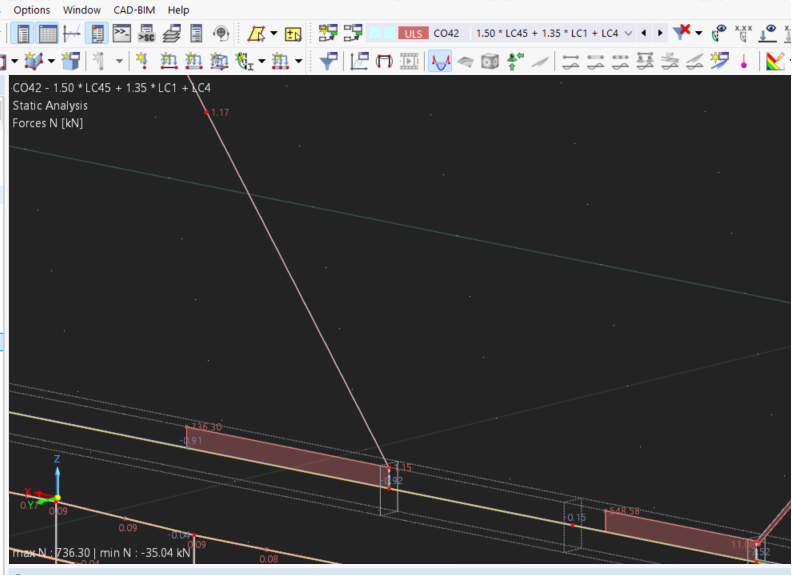
I have an issue with an RFEM6 model including cables, rigid members and automatically generated moving loads : for certain load combinations, extremely high normal forces are obtained in certain rigid members representing the excentricities between my parts.
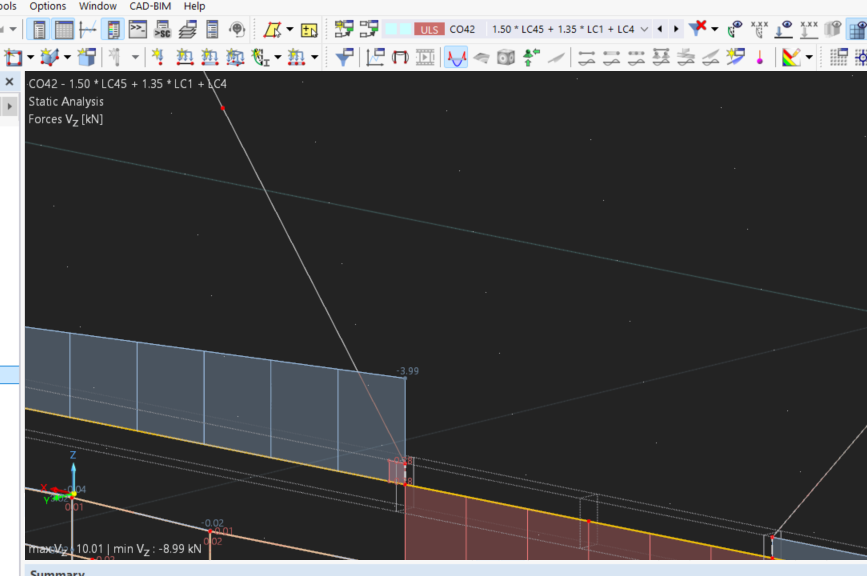
Even stranger, surrounding connected members have no trace of these crazy normal efforts. Example in the 1st image with CO42 :
Did anyone already encounter this ? Model is attached.
Thanks in advance for any help you can provide !
PAF 5.5m updated issue.rf6 (3,1 Mo)
Hi llanoir,
welcome to the Community  !
Usually such high forces for one member are extrapolated by theory 3rd order, as this theory takes into account inner forces being extrapolated on deformed structure:
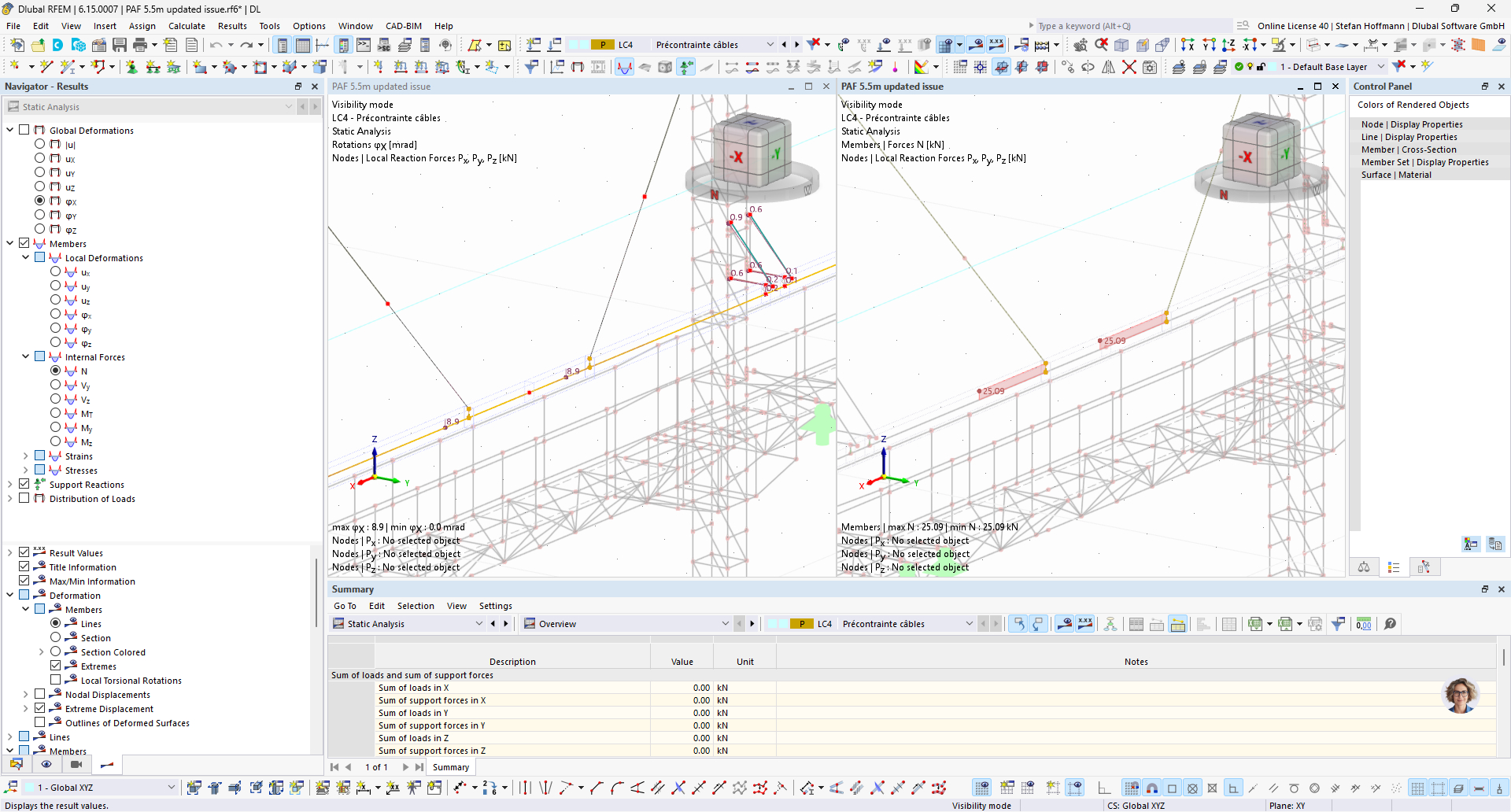
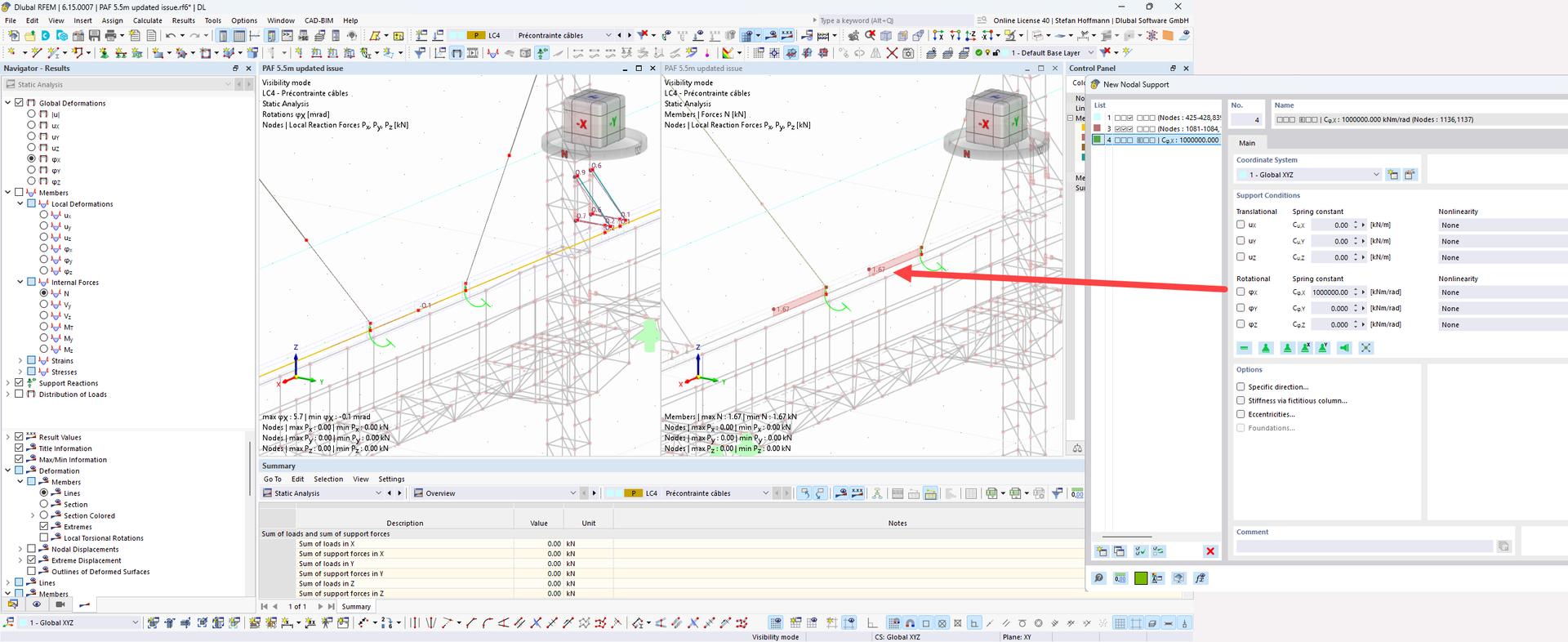
Global phi_X rotation of the rigid members is quite high compared to its neighboring objects. If you would e.g. limit that rotation by some imaginary nodal spring, N will be more understandable:
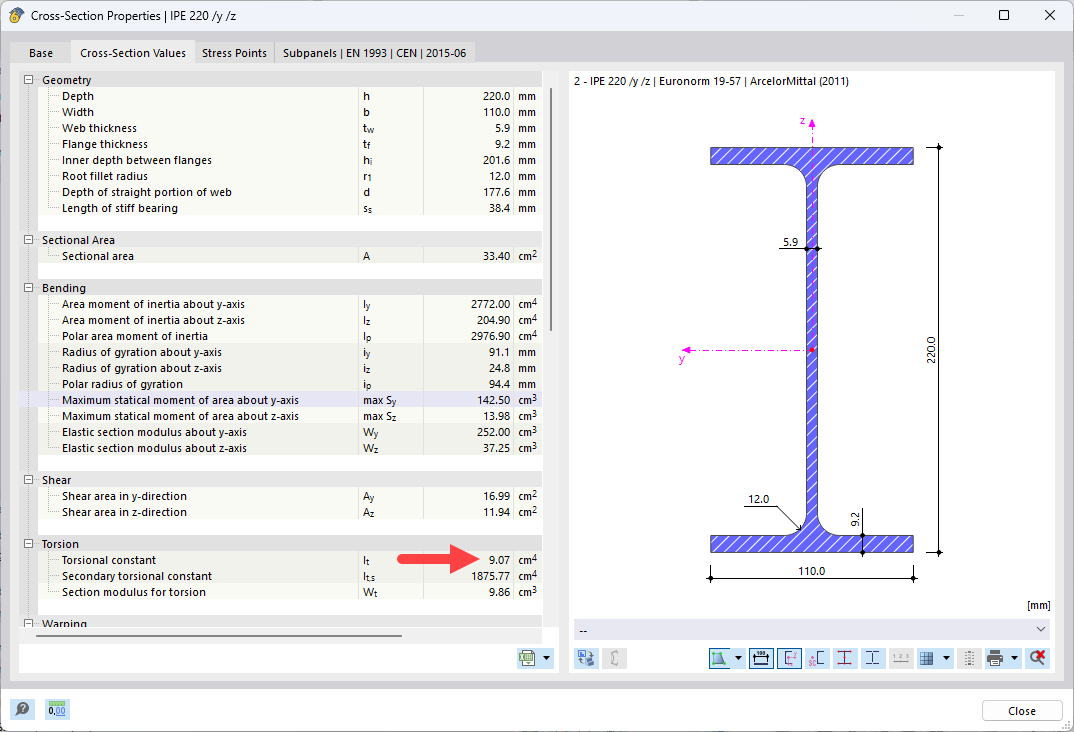
As you have a quite "weak" structural connection by a cable to that rigid member, I am not sure how you would prevent such a force in any other way, as the connected IPE has like no torsional resistance, which would limit the phi_X rotation:
Best regards
Stefan Hoffmann
Hi Stefan,
Thank you for taking a look at my model !
Interesting point about the rigid members, phix rotation.
However, I think it would be too favorable to set up a rotational spring with such high stifness in my model, as it would almost completely supress torsion in the IPE that could occur in reality.
In the end, I have replaced the problematic rigid members by regular beams with large sections, which seems to have solved the issue.
Have a nice day
Hi llanoir,
thanks for your response. Fully understand, that some imaginary nodal supports may falsify a model. Just wanted to show you, what I expect as numerical reason for that high force.
If you use a very stiff member and its working for you, absolutely fine
Best regards
Stefan Hoffmann