Hello everyone,
As part of my master's thesis, I had to investigate the influence of the trapezoidal sheet on the ideal bending-torsional buckling moment using RSTAB.
For this, I have the following question:
System: IPE 400 single-span beam, L=10 m, load 10 kNm, My= 125 kNm
From the module Steel EC 3 I get the same value for the manual calculation without shear and torsional restraint: Mcr = 108.67 kNm
If I assume a shear field stiffness S=100 kN, I get Mcr= 144.66 kNm Difference: 144.6 - 108.67 = 36 kNm
My question is:
How is the increase of Mcr due to the shear spring stiffness determined? Or how is Mcr derived from the shear spring stiffness?
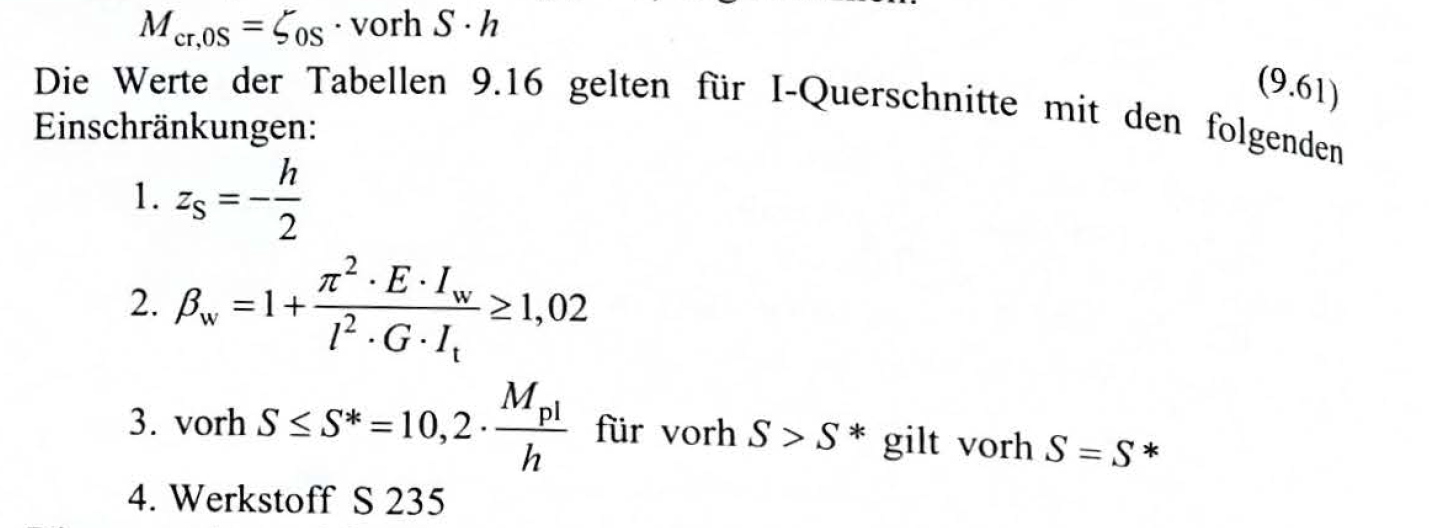
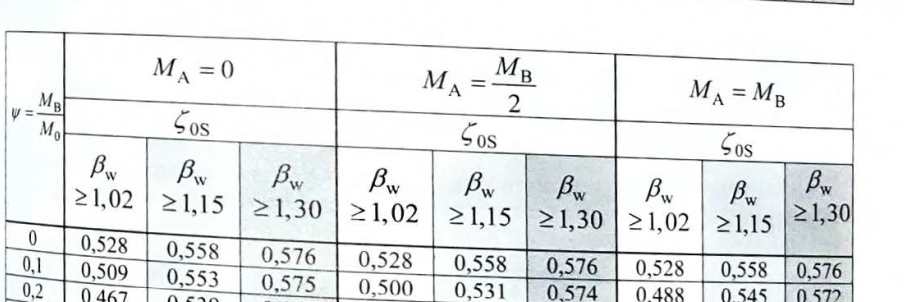
In the book Steel Construction Practice according to EC3 Volume 1 by Wagenknecht, Mcr from shear spring stiffness is determined as follows: Mcr = 0.56 * 100 * 0.40 = 22.40 kNm << 36 kNm
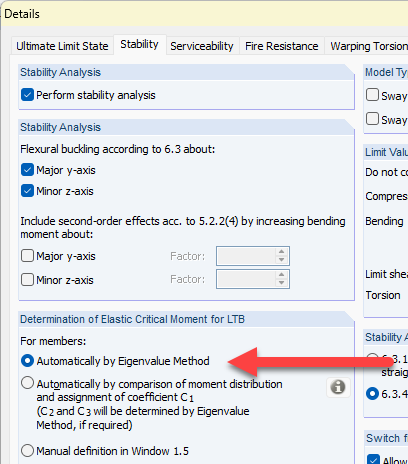
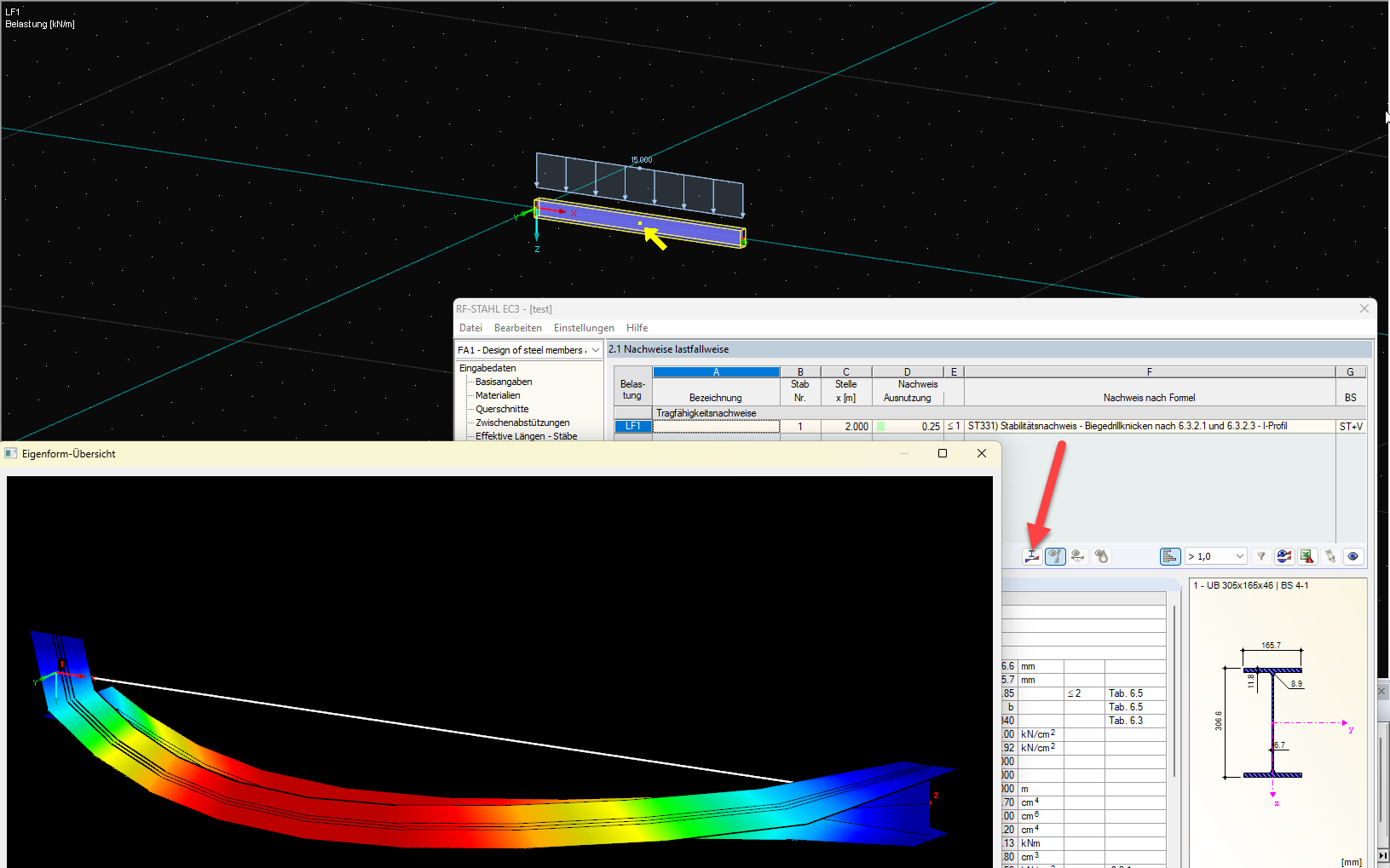
thank you for your question. I guess you mean RSTAB 8 if you’re talking about Steel EC3 Module but the answer is independent from the program version. The critical moment M_cr is normally calculated by an internal solver which takes all settings into account:
Thank you very much for your response
In the derivation of the formula for calculating Mcr, the eigenmode is assumed for the single-span beam with a cantilever support, which approximately corresponds to a half-sine function.
Do you think that due to the shear field stiffness, the eigenmode changes and thus no longer corresponds to the half-sine function? And that one therefore obtains a new value for Mcr?