Hi,
I am currently preparing a linear eigenvalue buckling analysis (LBA) of a steel-concrete composite beam model in RFEM 6.
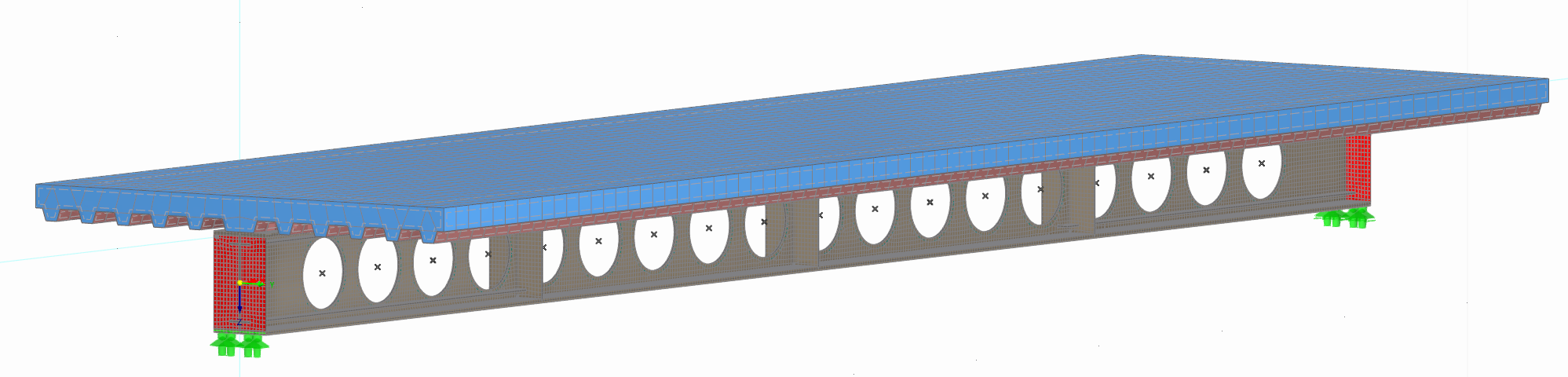
The full model uses the following material models:
- Structural steel S355 – Isotropic | Plastic (Surfaces/Solids)
- Profiled steel sheeting S350GD – Isotropic | Plastic (Surfaces/Solids)
- Concrete C35/45 – Isotropic | Damage (Surfaces/Solids)
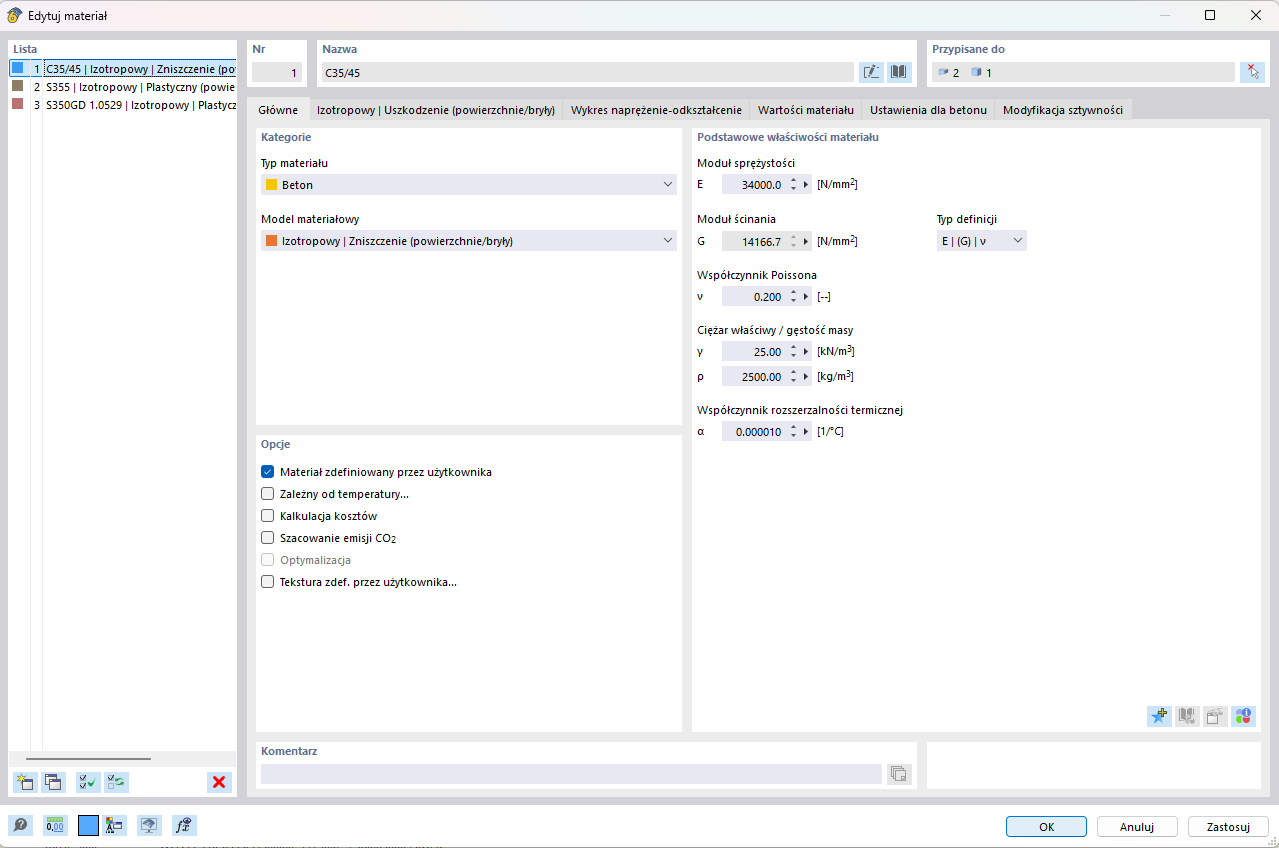
For the LBA, I would like to keep the same model and geometry but temporarily deactivate the nonlinear material behavior and perform the preceding static analysis with linear-elastic material stiffnesses.
The purpose of the linear-elastic analysis in my workflow is to determine the relevant elastic buckling mode shape of the perforated steel beam.
This buckling mode is then intended to be used as the initial geometric imperfection for the subsequent geometrically and materially nonlinear analysis.
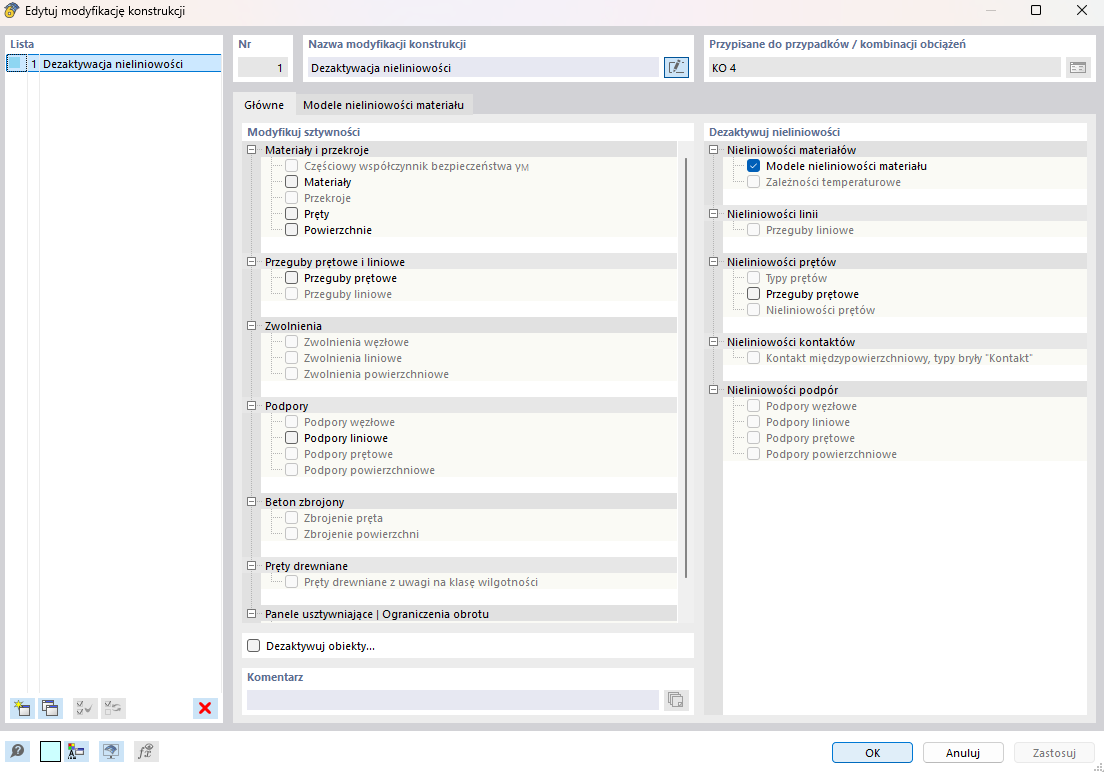
Therefore, I created a Structure Modification and selected:
Deactivate Nonlinearities → Material Nonlinearities → Nonlinear Material Models
Then, under the Nonlinear Material Models tab, I selected the nonlinear materials to be deactivated.
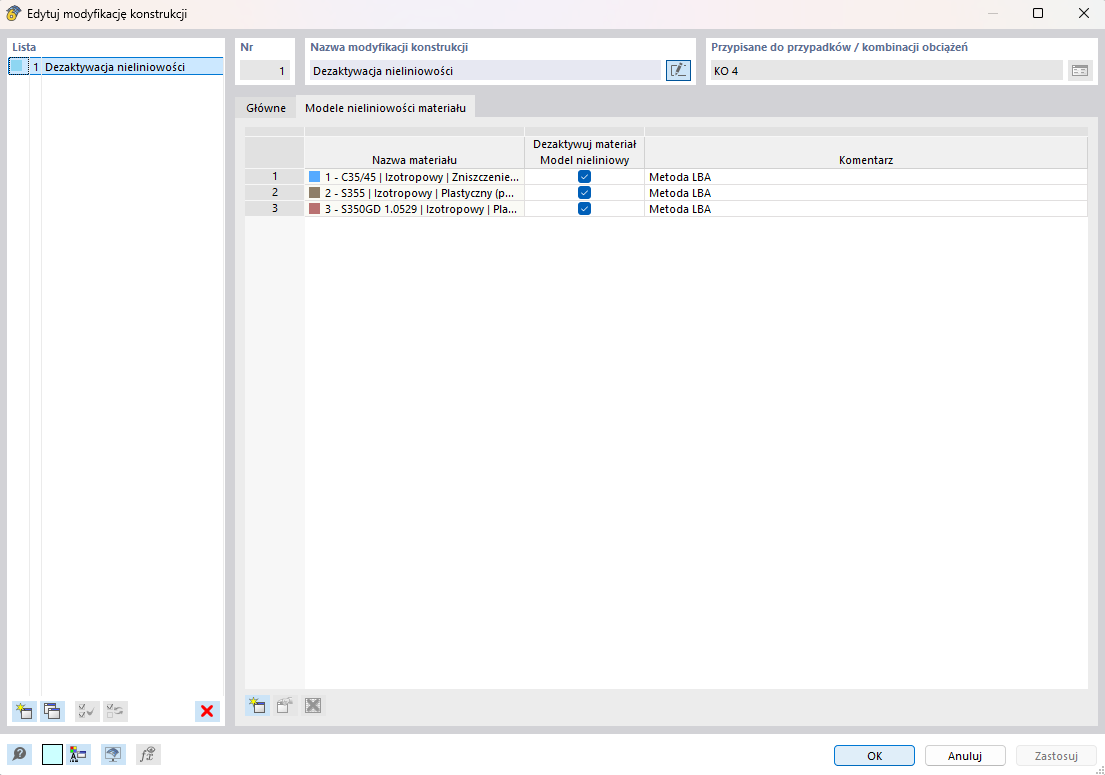
The problem appears to be related specifically to the C35/45 Isotropic Damage concrete model.
The model calculates correctly when the concrete Damage model is used normally. However, when I try to deactivate the nonlinear behavior of this material using the Structure Modification, the load combination fails to calculate. RFEM then reports that the results for the load combination are unavailable, so the subsequent stability analysis cannot be performed.

The problem seems to be isolated to the concrete Damage model. Deactivation of the nonlinear steel material models does not cause the same issue.
Is there any additional setting required for Damage materials, or could this be a limitation/bug in the current RFEM 6 implementation?
I would prefer to avoid creating separate models or manually changing the concrete material model between LBA and GMNIA, because the buckling mode obtained from the LBA will subsequently be used as the initial imperfection for the GMNIA.
Thank you in advance for any suggestions.
 Click on File → Save as and choose the following settings to reduce the file size: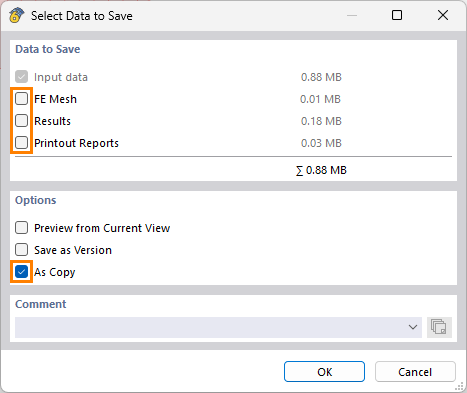
 Prefer not to share the file publicly? No problem – send it to me via direct message: click on my profile picture or user name → Message.