Our Knowledge Base is your hub for technical articles, tutorials, and background information on Dlubal Software – straight from our developers and support experts.
It's worth a look for these reasons:
 regular updates with practical, easy-to-follow articles
written by Dlubal specialists
including graphics and step-by-step explanations
Five articles at a glance:
1 Parameter Study Using Dlubal API
Read More
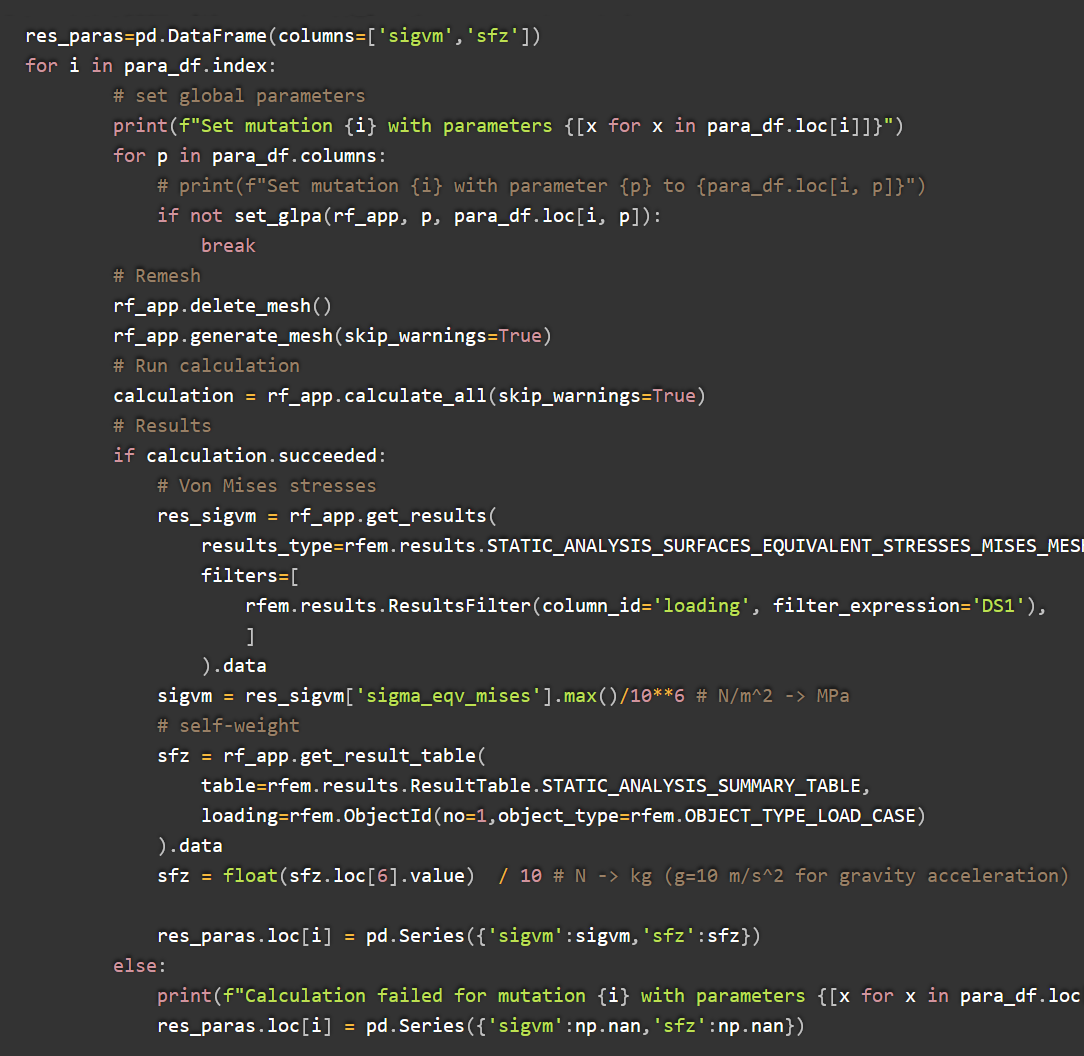
Parameter studies are a useful and suitable means of adapting simulations. The objectives can be of various natures: finding an optimal structure with minimal weight to simultaneously ensure safety and conserve resources, adjusting the mesh fineness to obtain reliable simulation results, or varying material properties to check the sensitivity of the simulation and make reliable statements about the structural safety.
Parameterized modeling is suitable for these cases and many others. In order to avoid calculating all variants individually, the Dlubal API can be used. This allows the calculation of the parameter study to run without the need for monitoring.
2 Grasshopper Interface for Design of Parametric Structures
Read More
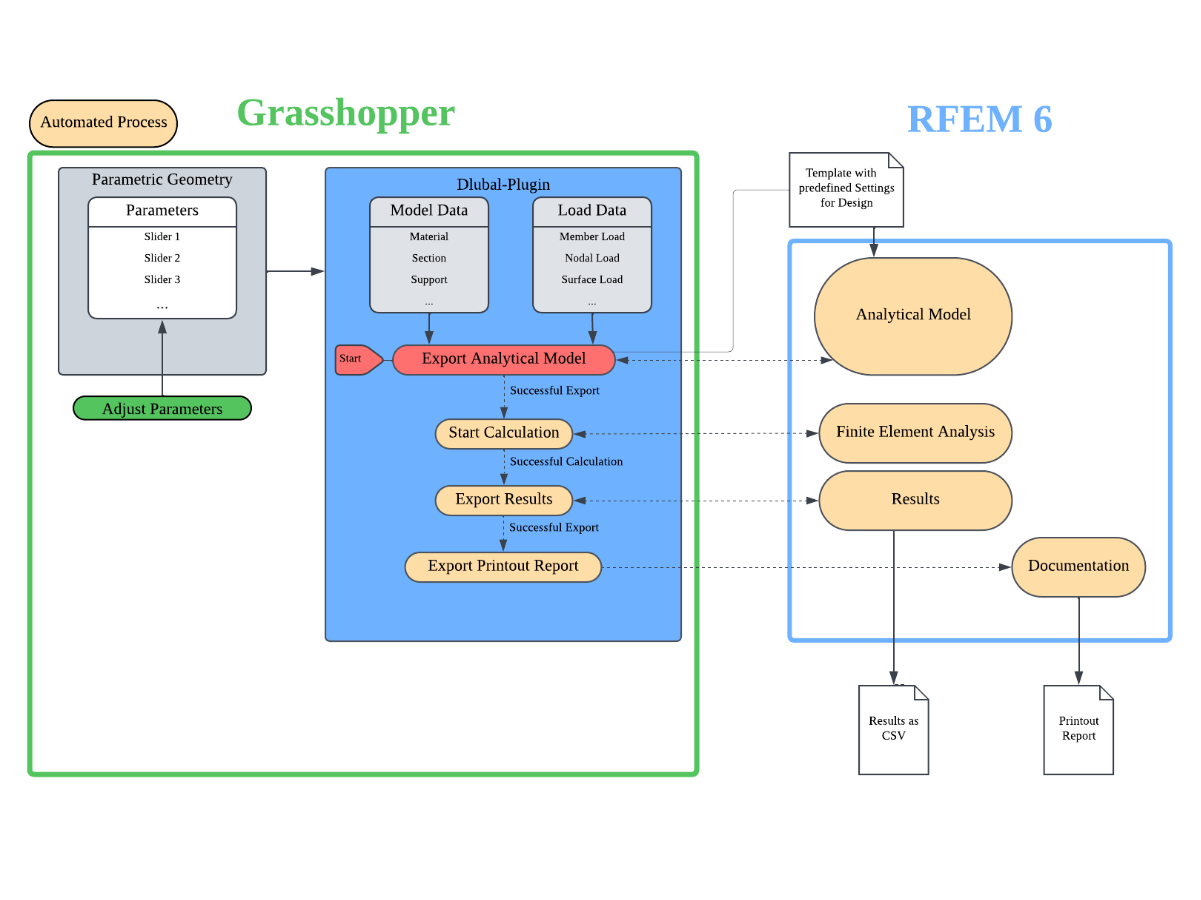
Grasshopper provides an intuitive environment for developing parametric design concepts, enabling efficient model adaptation and variant studies without extensive programming knowledge.
Using the Dlubal plug-in, the parametric geometry can be directly transferred to RFEM 6, allowing structural analysis and design to be integrated into the early design phase and applied consistently across different model variants.
3 Design Support for Timber Design – SLS, Compression, and Shear Force Reduction
Read More
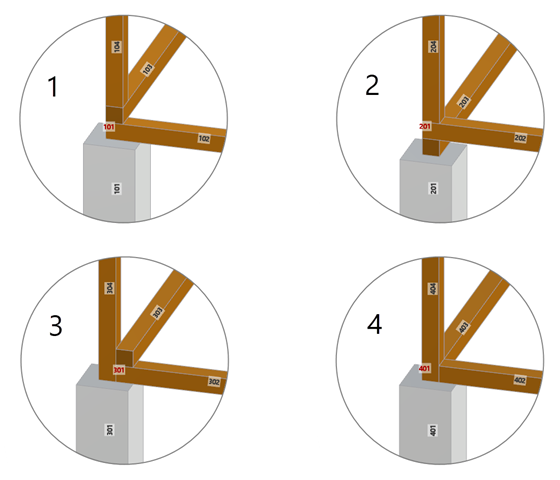
The design supports in RFEM 6 and RSTAB 9 play an important role in the deflection verification, the verification of compression perpendicular to the grain, and the consideration of shear force reduction. They are used to segment members or member sets for the deflection verification and to define the boundary conditions required for the verification of compression perpendicular to the grain and the consideration of shear force reduction.
4 Analysis of High-Strength Steel Profile and End-Plate Connections
Read More
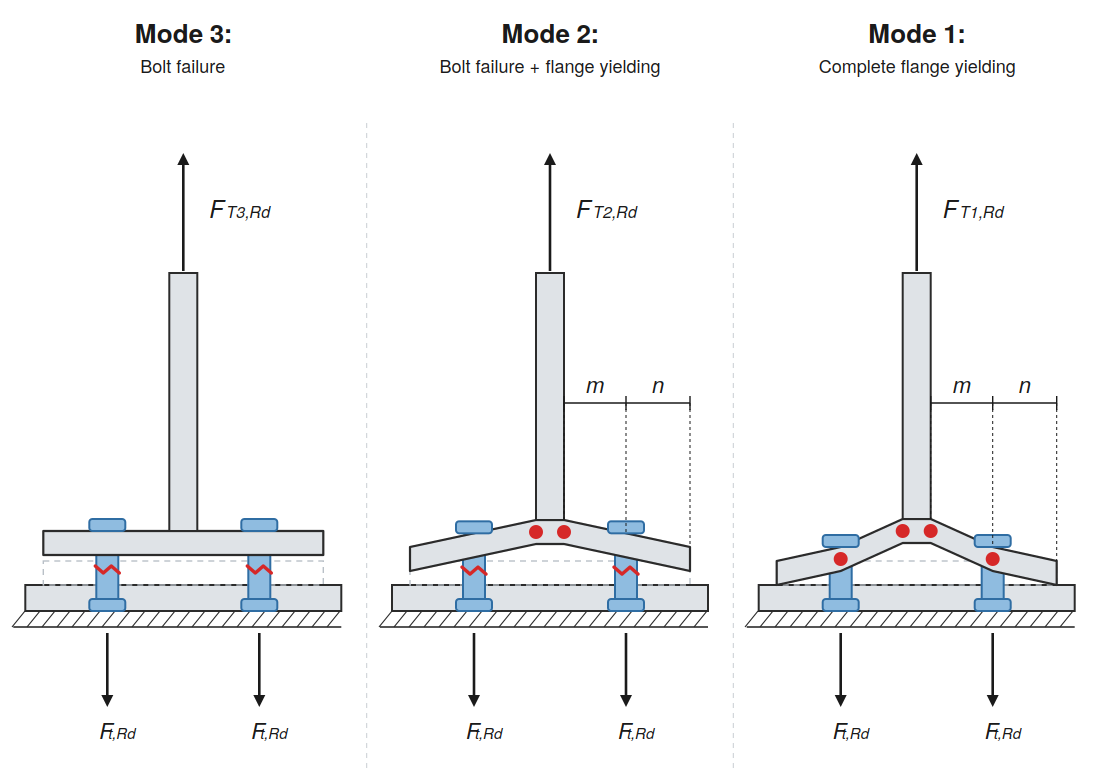
This study presents a verification of the Steel Joints Add-on implemented in RFEM for the analysis of high-strength steel connections comprising profile sections and end plates.
The structural behaviour and load-bearing performance of these joints are evaluated against the design provisions of Eurocode 3 (EC-3) and subsequently compared with the predictions of a Finite Element Model developed in RFEM, the latter having been validated against experimental test data in prior work.
5 Design of local load introduction according to EN 1993-1-3
Read More
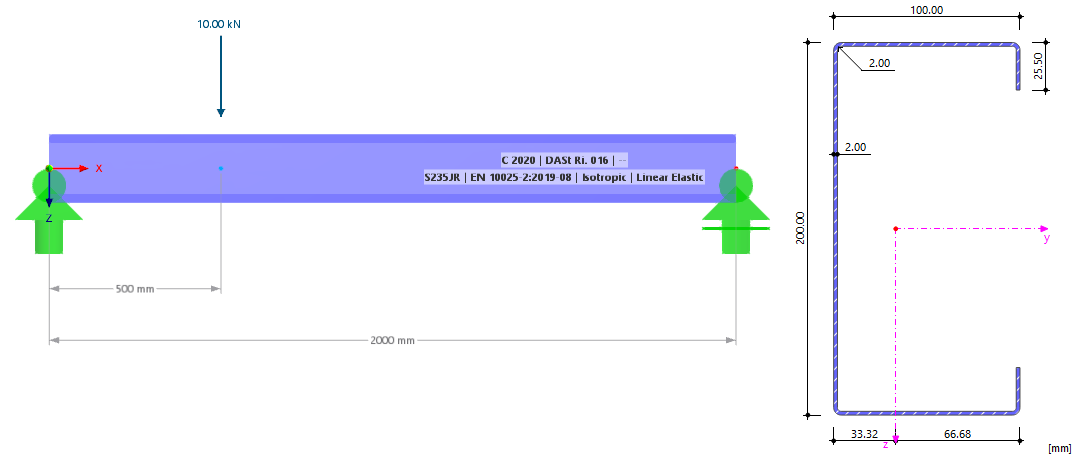
The article describes the analysis of local load introduction for unstiffened webs according to EN 1993-1-3. An example of carrying out the verification on a bending beam demonstrates the practical application of the described methodology.
Curious about more insights?
 Explore more articles for your daily work: Dlubal Knowledge Base
Questions, suggestions?
Just answer this post; we are glad to discuss!