Our Knowledge Base is your hub for technical articles, tutorials, and background information on Dlubal Software – straight from our developers and support experts.
It's worth a look for these reasons:
 regular updates with practical, easy-to-follow articles
written by Dlubal specialists
including graphics and step-by-step explanations
Five articles at a glance:
1 Parametric Analysis of End-Plate Connections with Steel Joints for RFEM
Read More
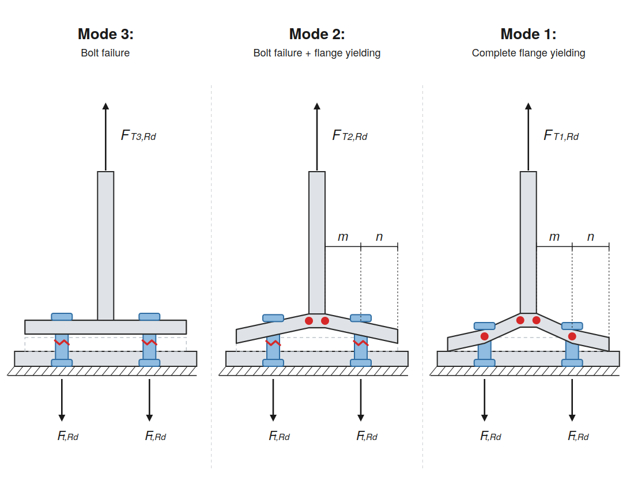
This study evaluates the influence of bolt diameter and end-plate thickness on the capacity and failure modes of nine extended end-plate beam-to-column connections. Moment resistances and failure modes obtained with the Steel Joints add-on for RFEM are compared against a detailed finite element model (ROFEM) and the Eurocode 3 (EN 1993-1-8) component method.
Steel Joints for RFEM reproduces the governing failure mode in every specimen, while the EC-3 hand method underestimates capacity for thin end plates and converges as the bolt becomes the weak component.
2 Analytical Creep Curve → Rheological Model → Time-Dependent Strain State
Read More
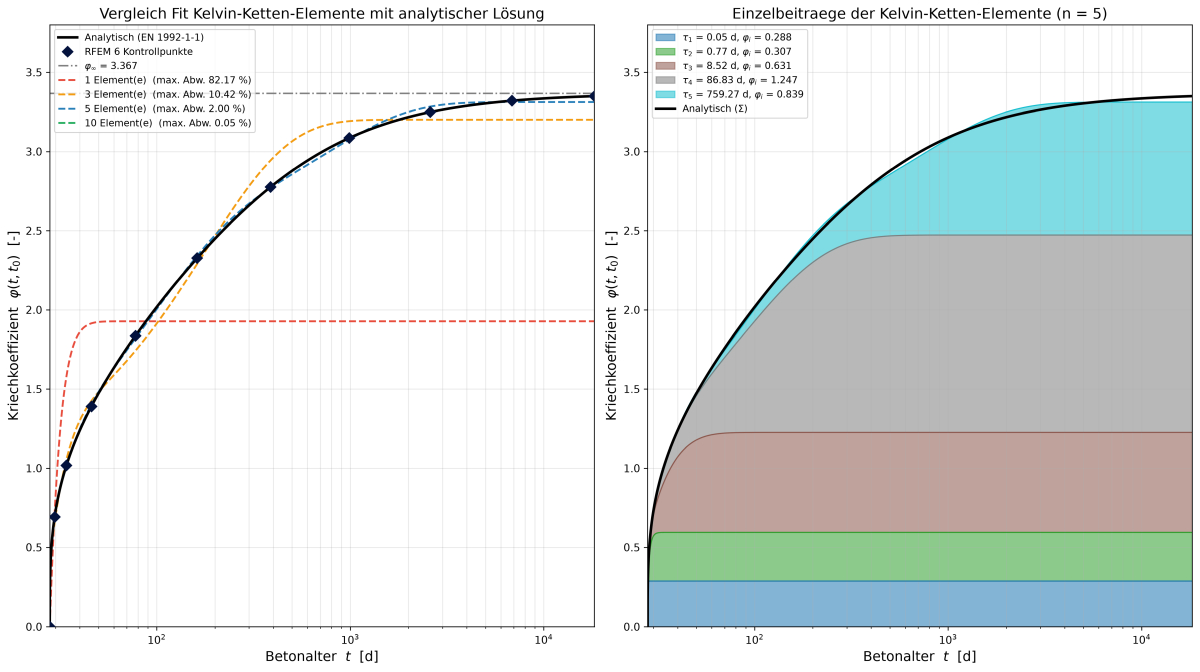
This article explains the theoretical background and implementation of time-dependent creep analysis in RFEM 6 using a simplified example. The analysis is particularly relevant for concrete and timber structures, where long-term loading causes additional deformation.
Using the Kelvin chain model, a time-incremental analysis can account for redistribution effects, material nonlinearities, and construction stages, providing a more realistic representation of structural behavior.
3 Constrained Modulus Method in RFEM 6
Read More
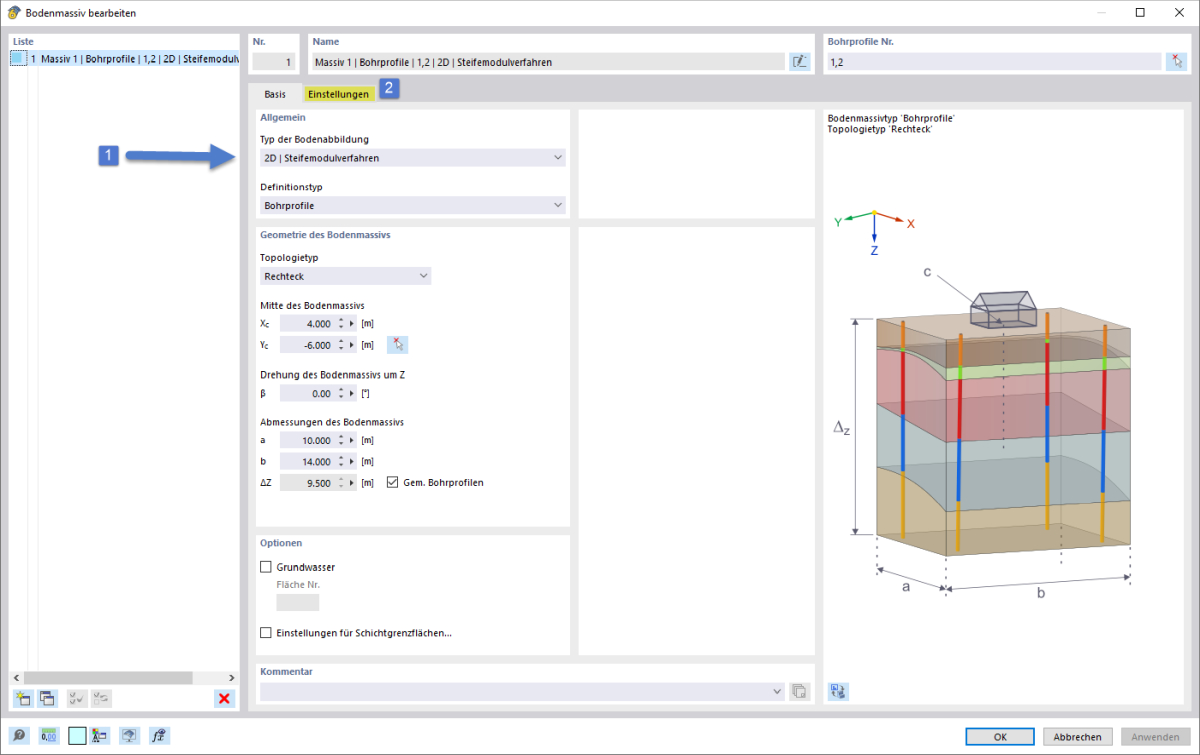
The constrained modulus method is a reliable, standard-compliant, and computationally efficient method for considering soil-structure interaction in structural analyses before turning to complex, fully coupled geotechnical FEA models.
This technical article uses an example to explain the application of the constrained modulus method in RFEM 6.
4 Cross-Section Optimization in Serviceability Limit State
Read More
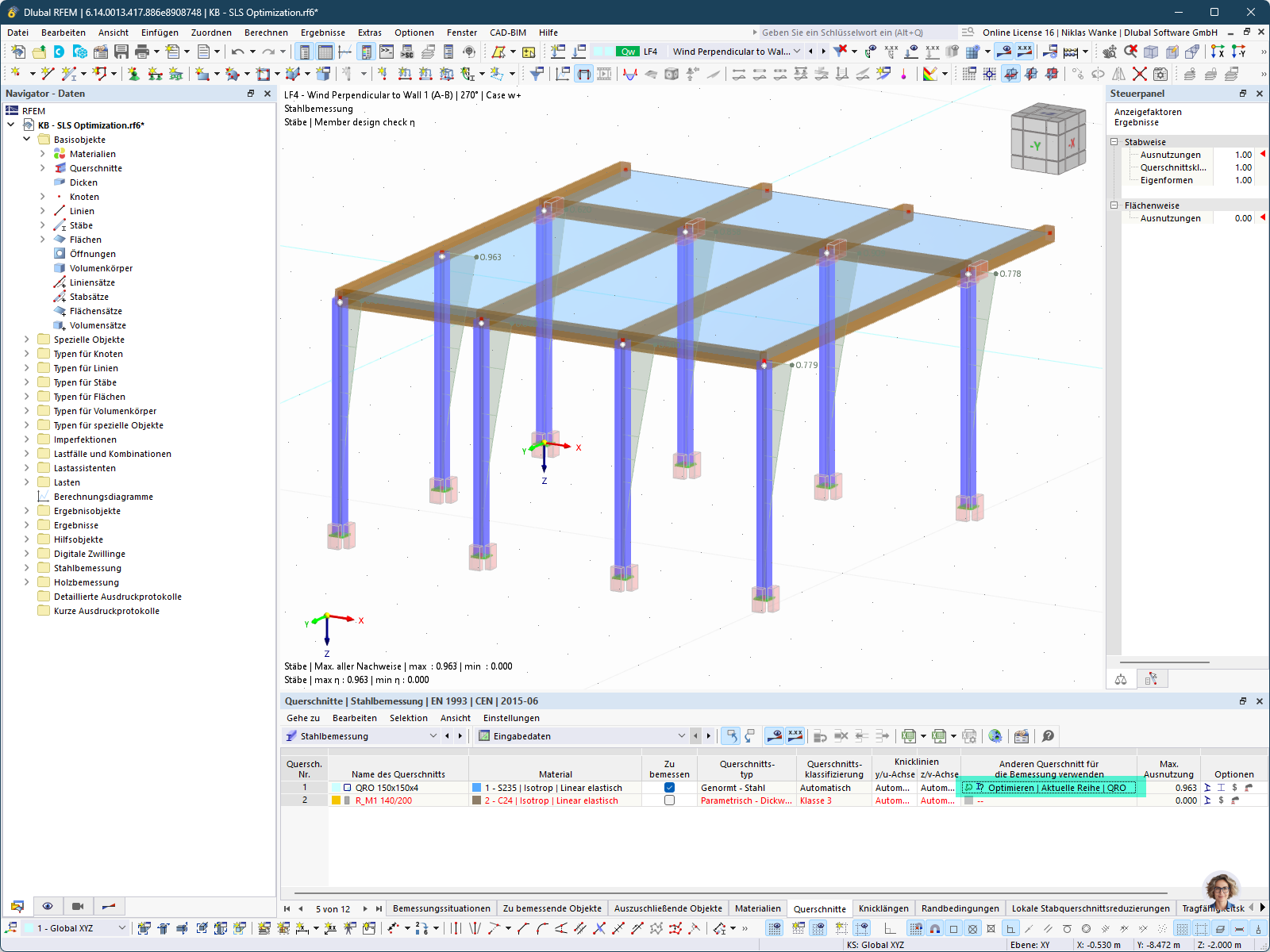
This article explains how automated cross-section optimization works for the serviceability limit state in RFEM 6 and RSTAB 9. The feature helps dimension member cross-sections to meet allowable deformation limits efficiently and automatically.
5 Consideration of Reinforcement in Column Shortening in ETABS and RFEM
Read More
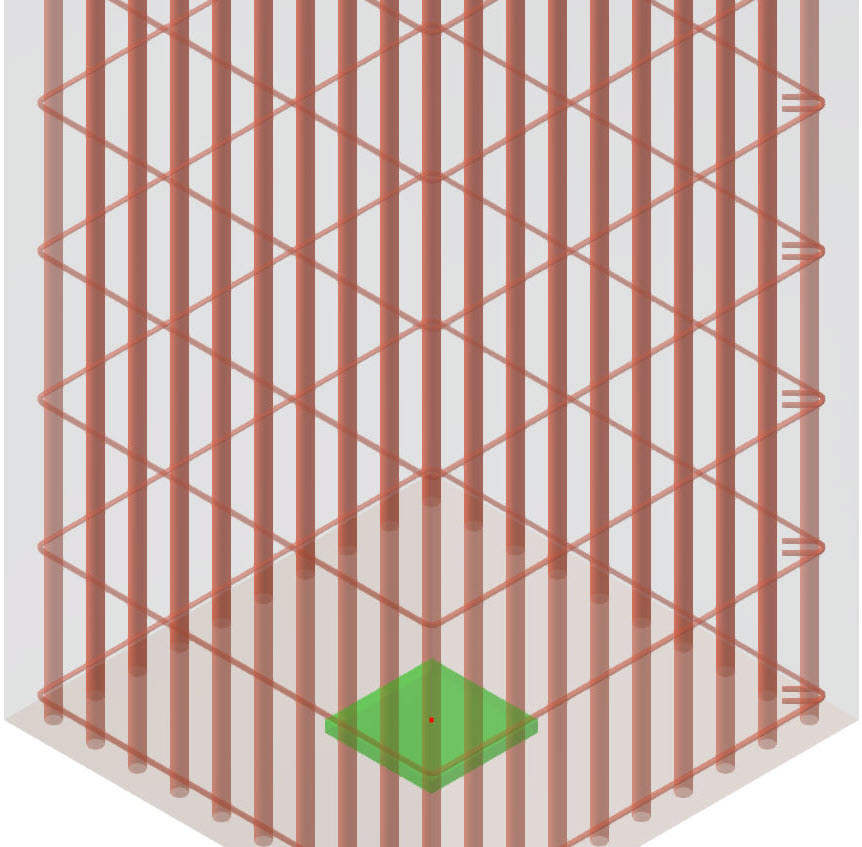
Differential shortening between the core and perimeter columns is a key design challenge in high-rise buildings. The article explains the underlying mechanisms and shows how considering longitudinal reinforcement can effectively reduce column shortening using ETABS and RFEM 6 as example.
Curious about more insights?
 Explore more articles for your daily work: Dlubal Knowledge Base
Questions, suggestions?
Just answer this post; we are glad to discuss!