Hello Pedro,
Thanks very much for your interesting questions.
1) How RWIND converts velocities into pressures
RWIND uses a numerical CFD (Computational Fluid Dynamics) approach to simulate wind flow around structures in a virtual wind tunnel. The airflow is governed by the Navier–Stokes equations together with an appropriate turbulence model (typically RANS). In this framework, pressure and velocity are not derived from each other using a single formula; instead, they are solved simultaneously as part of the governing equations of the flow.
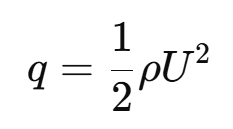
The commonly known expression:
represents the dynamic pressure, which is primarily a reference quantity used for normalization (for example in pressure coefficients). It is not the actual pressure acting on the building surface.
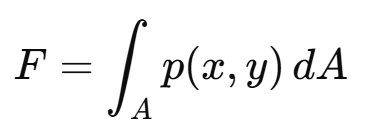
RWIND directly computes:
-
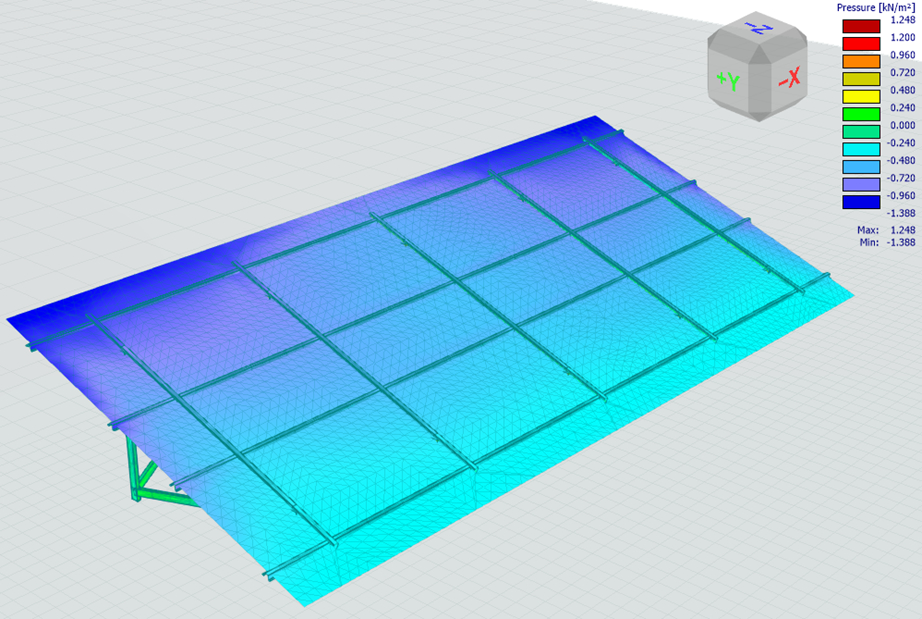
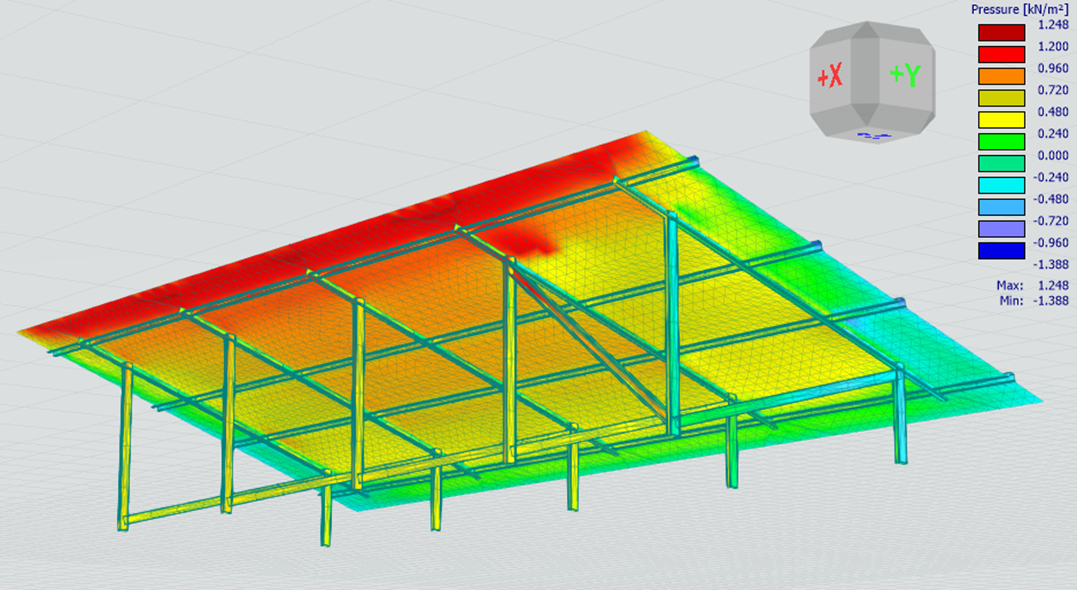
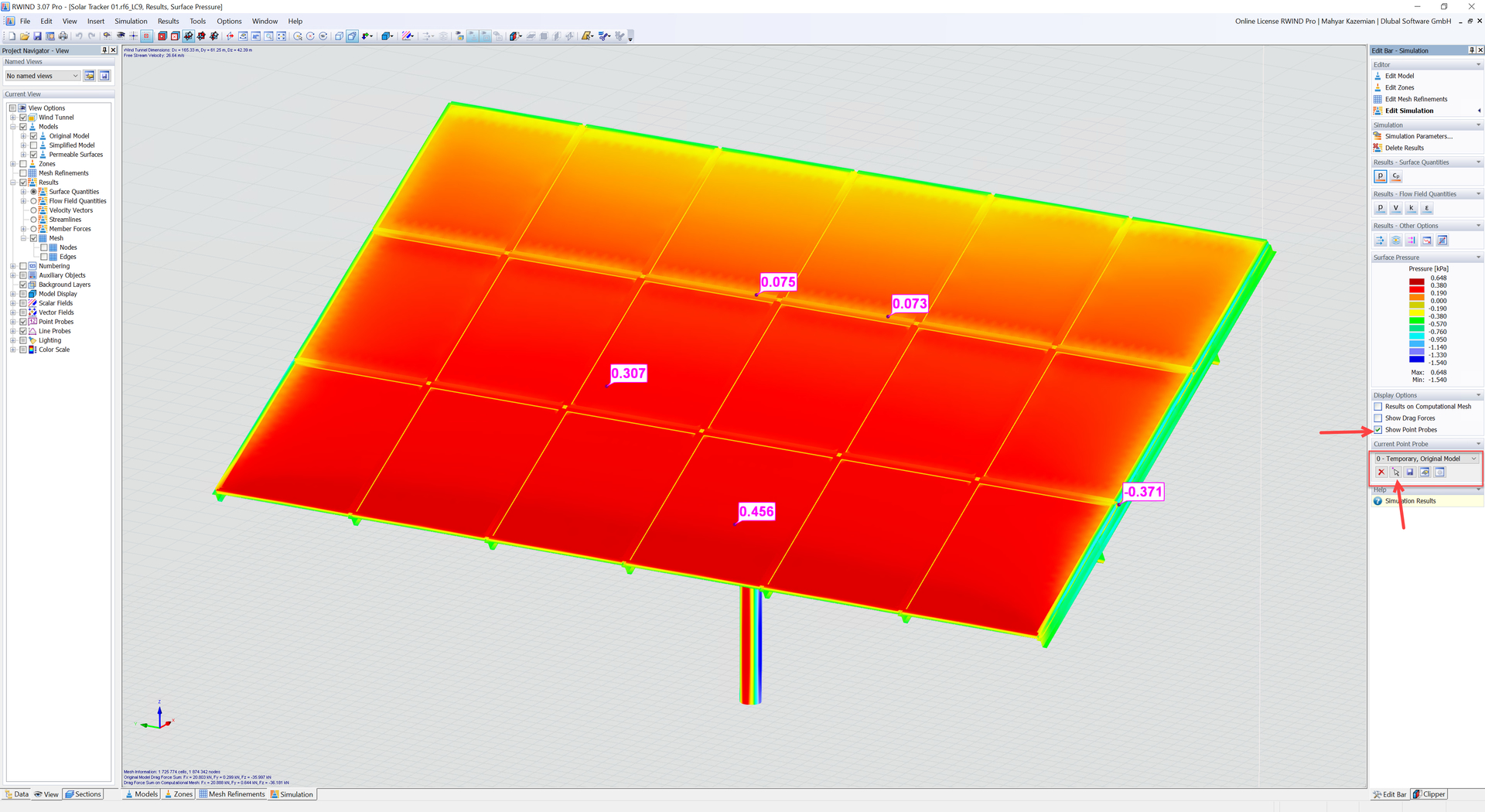
Local static surface pressures on the geometry
-
Including effects of stagnation, acceleration, separation, and turbulence
-
Based on the full CFD solution
*How pressure coefficients (Cp) are computed in RWIND
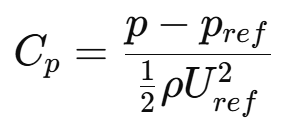
When RWIND reports Cp, it uses the standard definition:
where:
-
p = local surface pressure obtained from the CFD solution
-
pref = reference (far-field) pressure
-
Uref = reference inlet velocity of the CFD model (typically the free-stream velocity of the primary model, but editable by the user)
-
ρ = air density
It is important to note that:
-
The reference velocity and height used in RWIND may differ from those defined in Eurocodes,
-
Therefore, CFD-based Cp values cannot be directly compared to tabulated Eurocode Cp values without consistent normalization,
-
Eurocode Cp values are area-averaged and conservative, while RWIND provides high-resolution local pressures on the exact geometry.
2) Does RFEM 6 apply coefficients to RWIND loads?
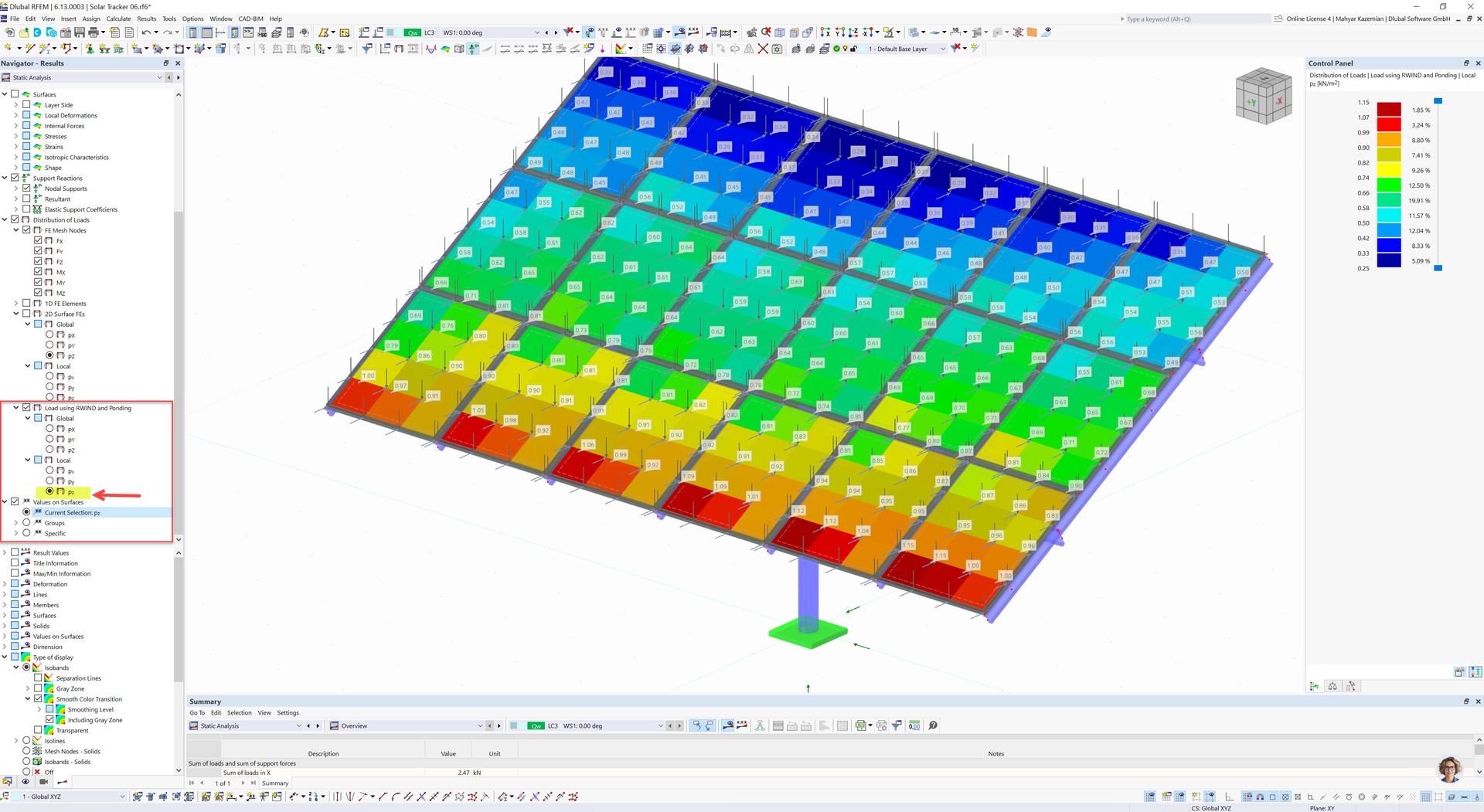
RFEM 6 does not modify or scale the wind pressures imported from RWIND. The pressures are transferred as externally defined surface loads.
However, during the structural design stage, RFEM naturally applies:
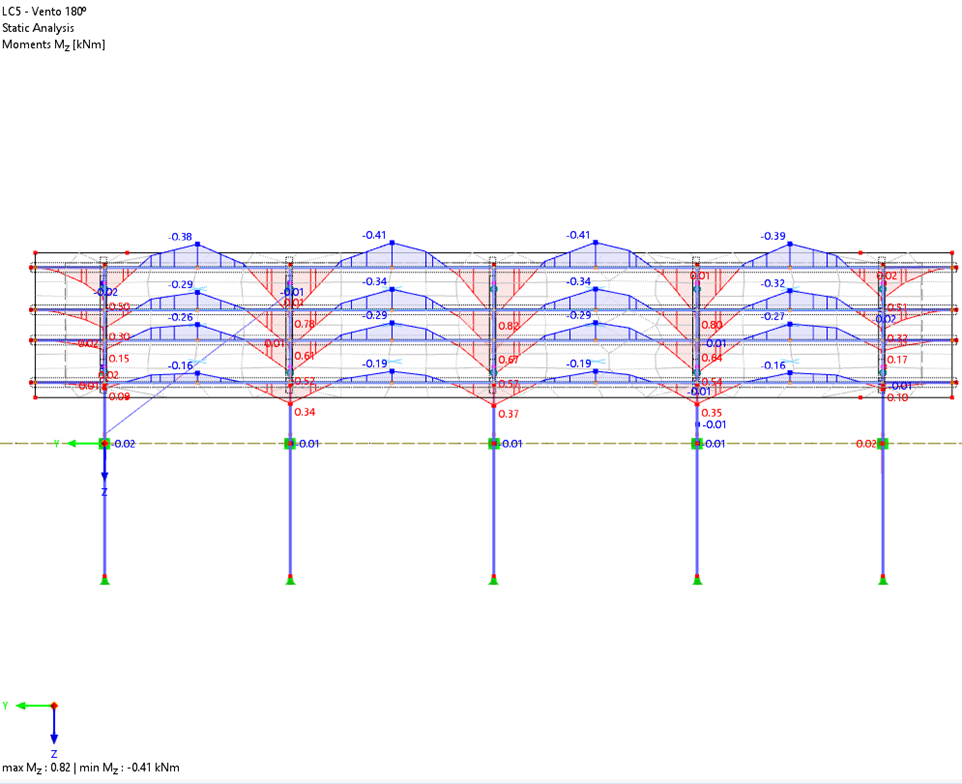
As a result, discrepancies between hand calculations and numerical results typically arise from:
-
Different reference wind velocities or heights
-
Comparison of CFD mean pressures with Eurocode conservative peak values
-
Differences in terrain roughness or inlet profile definitions
-
Comparing characteristic RWIND loads with design values in RFEM
Exact point-by-point agreement between Eurocode tables and CFD results is neither expected nor methodologically correct. What should be consistent is the global force level and overall trends.
Practical recommendation for verification
When verifying RWIND results manually:
-
Compare characteristic values with characteristic values
-
Use the same reference dynamic pressure
-
Do not directly compare CFD Cp with Eurocode Cp without proper conversion
-
Carefully check reference height, wind profile, and terrain parameters
*In addition, there are insightful validation examples related to the Eurocodes and other standards on our website, which are highly recommended for review at the following link:
 https://www.dlubal.com/en/downloads-and-information/examples-and-tutorials/verification-examples?q="Mahyar%20Kazemian,%20M.Sc."&f=_


 Method A – Direct pressure integration