Hi Florind,
Thank you for your question!
Below you find my answers to your inquiries. I hope they help clarify things! For the sake of completeness and a better understanding, I’ve included your original questions as well. 
1. Should tension-only cable elements be included or excluded in the modal analysis?
It's challenging to provide a direct answer here, as the best approach depends on the specific conditions of each structure. There is no one-size-fits-all rule. Below are some insights that may help guide your decision.
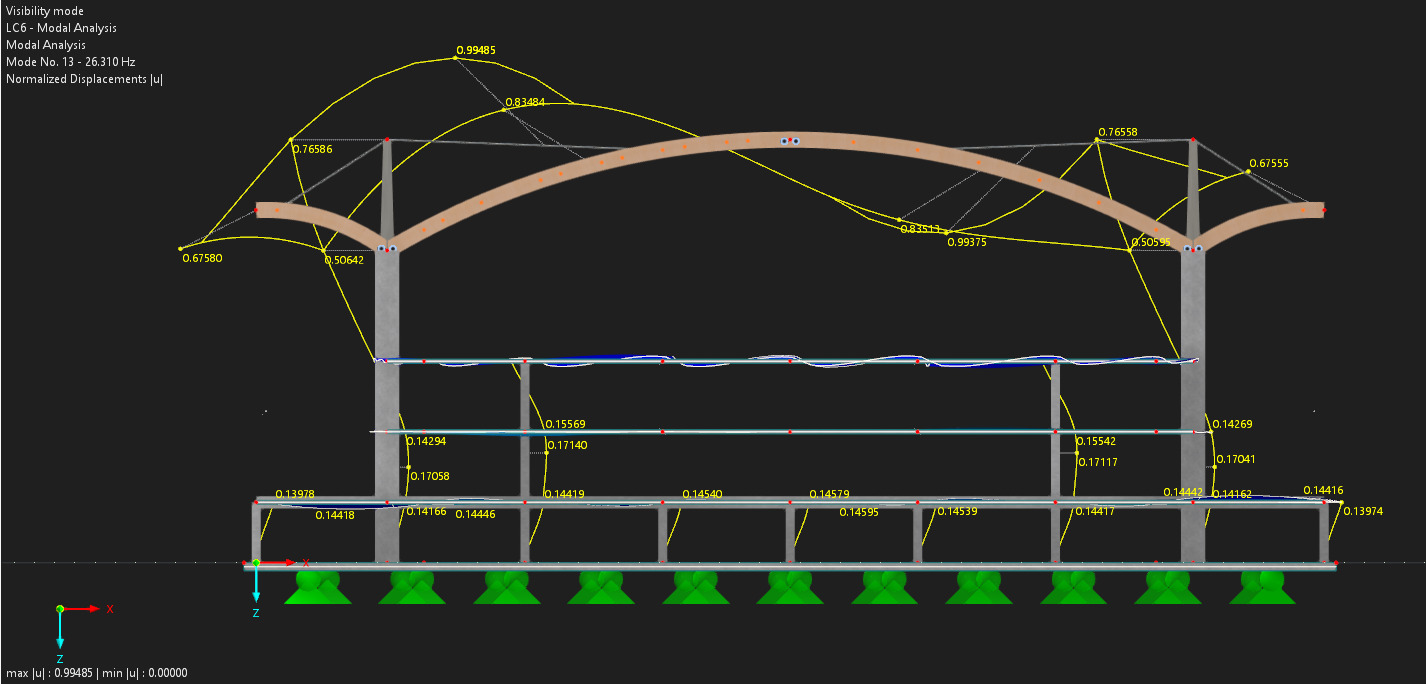
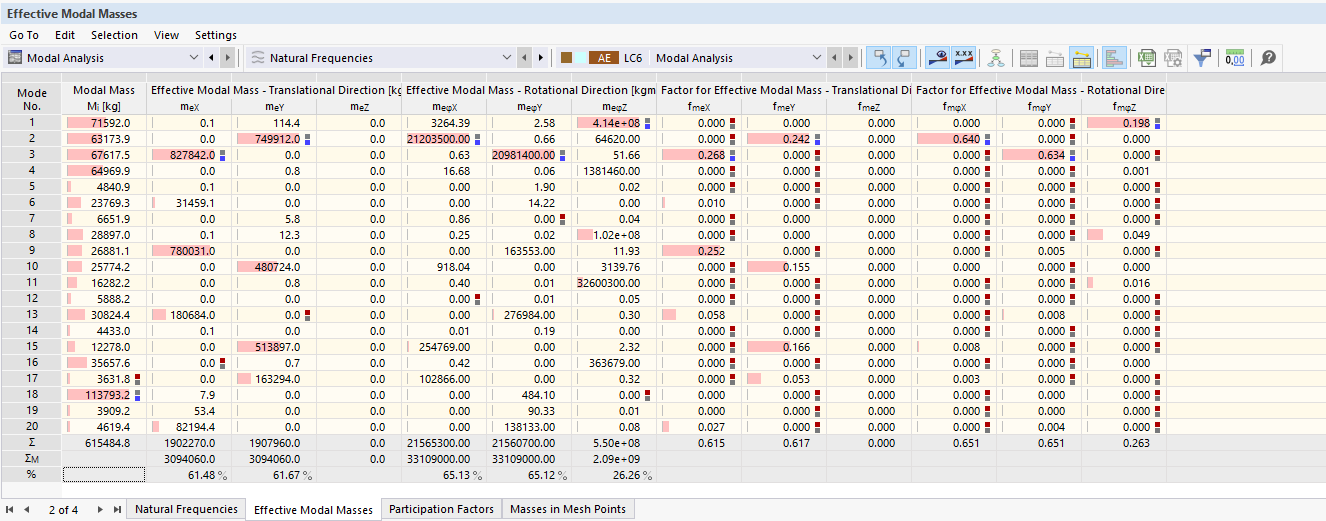
The first thing to consider is the objective of the modal analysis, since this type of analysis typically serves as a preliminary step, not a final result. From your images, it's unclear whether you are using a Response Spectrum Analysis or if your goal is to perform a seismic analysis in conjunction with the modal analysis. Given the mention of the 90% effective modal mass participation requirement, I assume you are aiming for a seismic analysis.
In this case, my question is:
Do you expect tension-only cable elements to participate in the seismic response of the structure?
-
If yes, they should be included in the modal analysis.
-
If not, you can leave them out, provided you ensure that they do not generate unexpected internal forces (such as with elements that have hinges).
A relevant section of Eurocode that summarizes this concept is EN 1998-1, 4.2.2: "Primary and secondary seismic members". It specifies that the strength and stiffness of secondary elements should be neglected. This might be helpful in your decision-making process.
My recommendation:
Run multiple iterations, including and excluding these elements, then compare the results. This approach will allow you to assess the relevance of these elements to your analysis. 
2. Should all members be active in the modal analysis, or are some elements (e.g., small cantilevers, cable bracing) normally deactivated to avoid unrealistic local modes?
If you encounter too many local modes, you may consider deactivating certain elements to prevent unrealistic results. However, as a more general rule, I would again refer to EN 1998-1, 4.2.2.
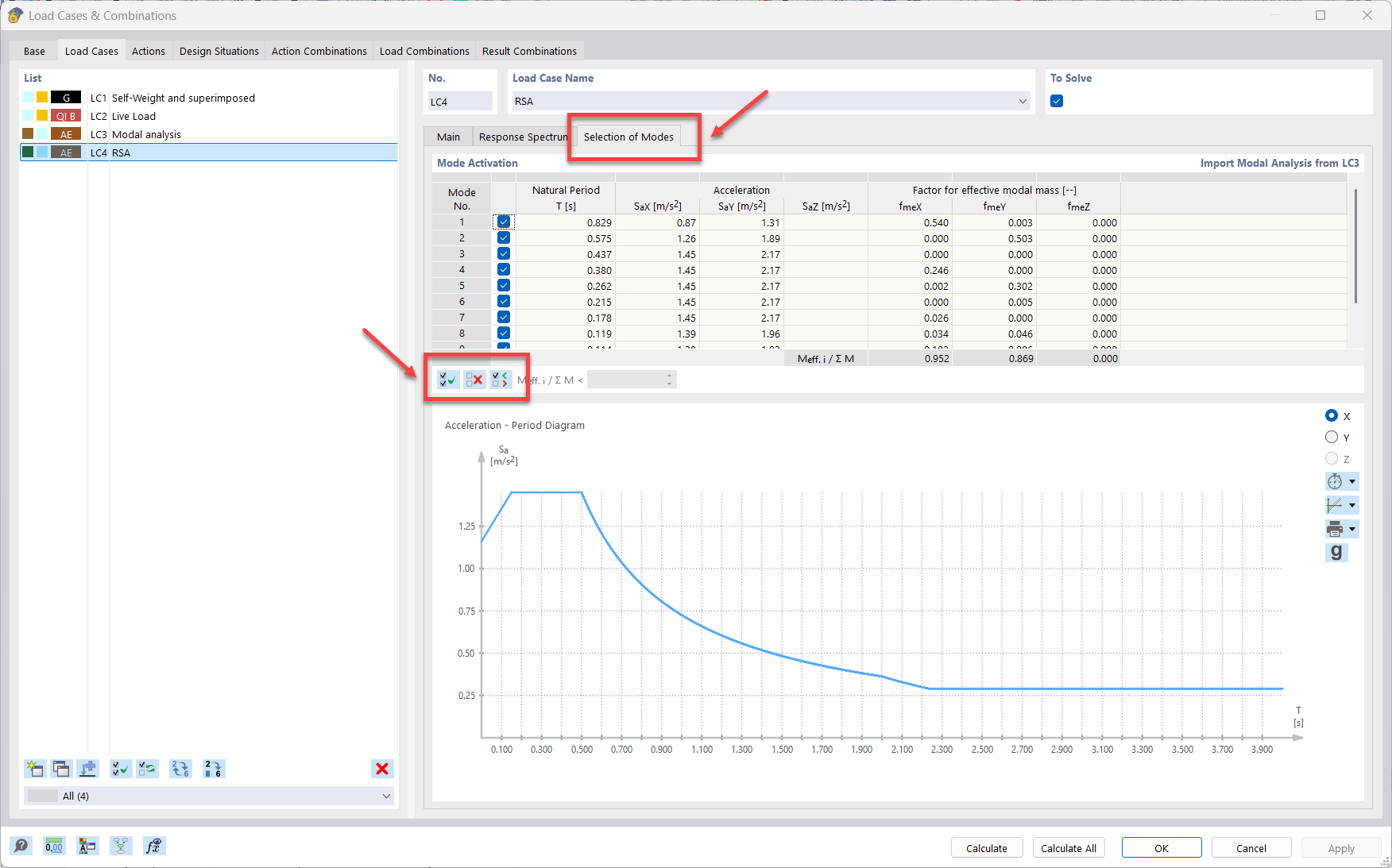
For a Response Spectrum Analysis, you can select the modes in the corresponding tab and filter them based on effective mass participation. Therefore, don't worry too much about local modes in the Modal Analysis, as you can effectively manage them during the Response Spectrum Analysis. 
3. How should the mass matrix be set for a structure like this?
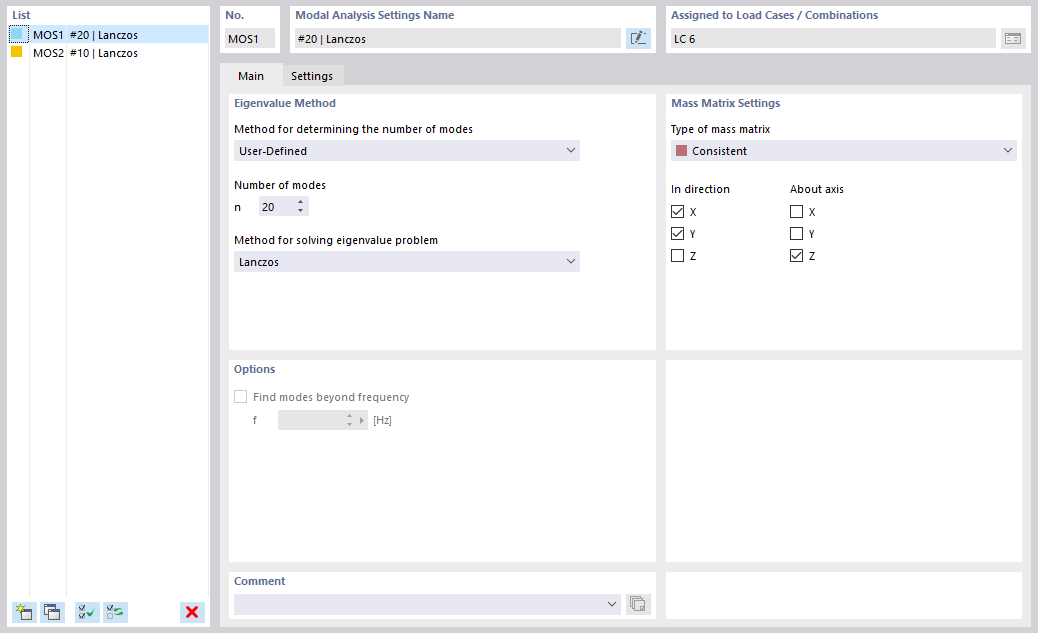
The answer depends on the specifics of your analysis. For a classical building analysis, you typically consider the two horizontal directions and the torsional direction (about axis Z). If you're also considering the vertical component of the earthquake, you should activate the Z-direction mass.
Regarding rotational masses, you should ask yourself:
You may want to run a couple of tests: one with and one without these settings. This approach will allow you to evaluate the impact of such choices on the overall results.
As a software provider, it is difficult to provide a universal rule for this, but it's an important decision that can significantly affect the results of your analysis.
4. Should the modal case “consider initial state” from the form-finding or prestress case?
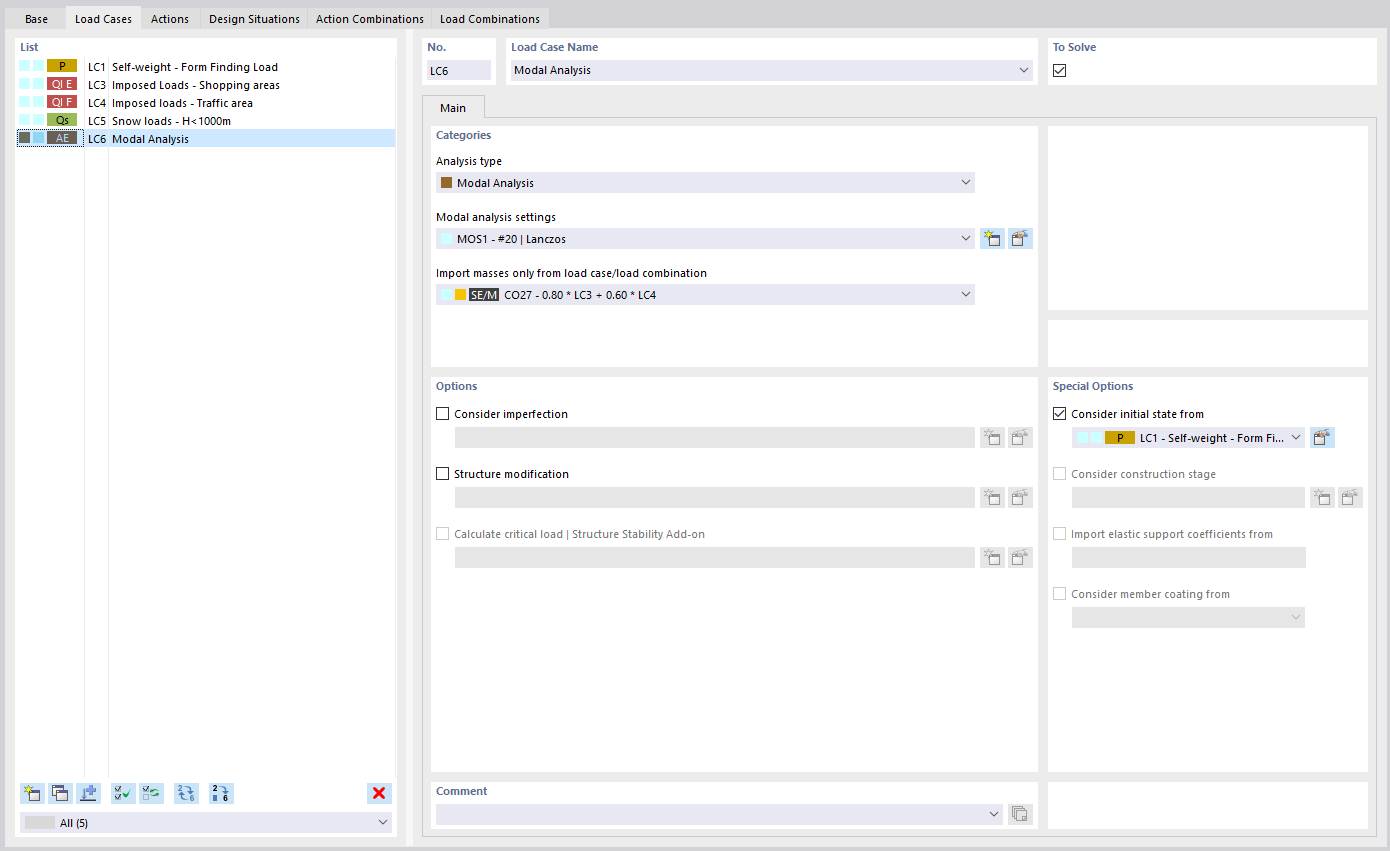
If the prestress or initial tensions are applied to primary elements, I would recommend including them as the initial state. As with many other settings, the best way to assess the relevance of this choice is by running the Modal Analysis both with and without this condition.
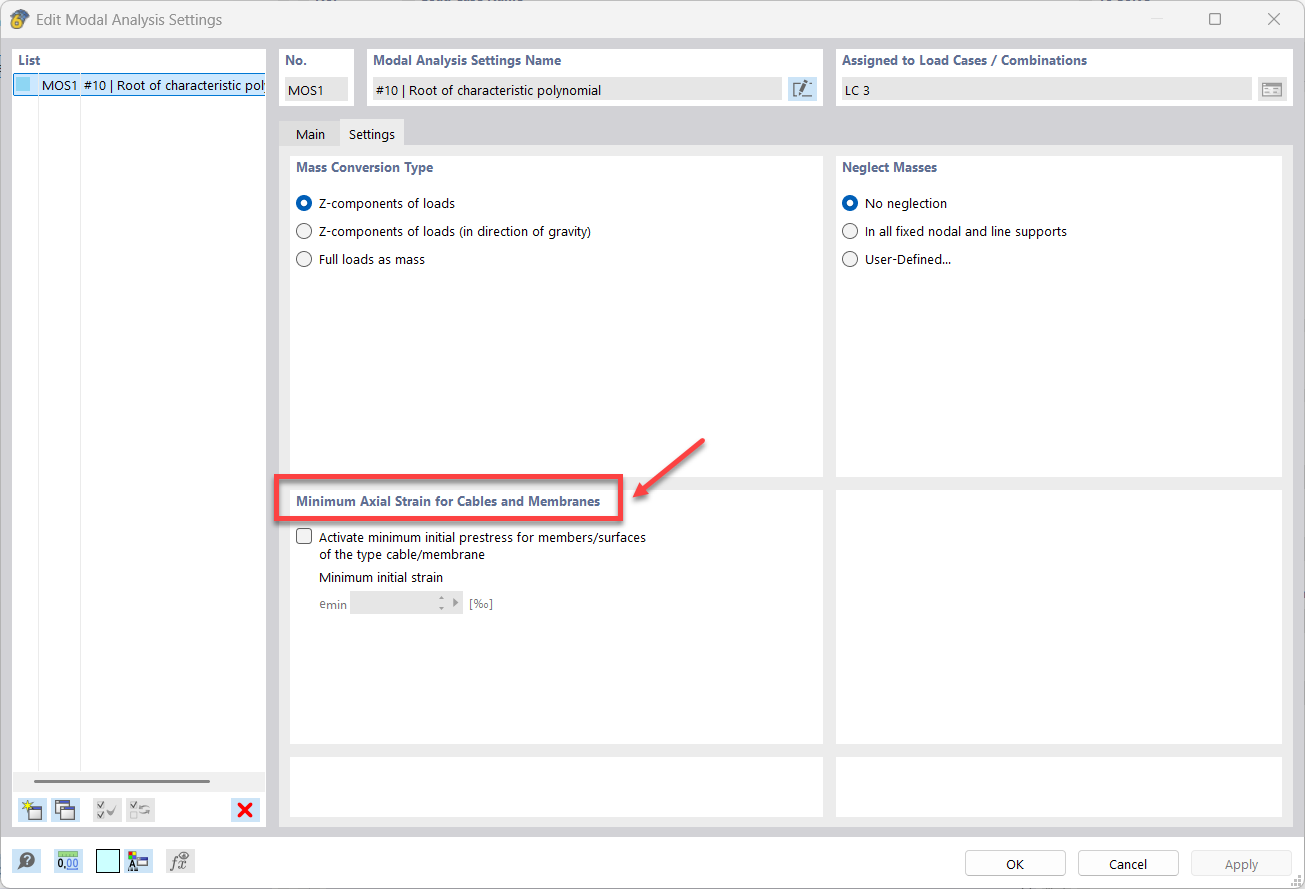
Additionally, for Cables and Membranes, there is a specific setting in Modal Analysis that may replace the need for an initial state or form-finding analysis, which could simplify your process.
5. Is it normal for such a mixed RC + timber + cable structure to require more than 20 modes to reach 90% modal mass?
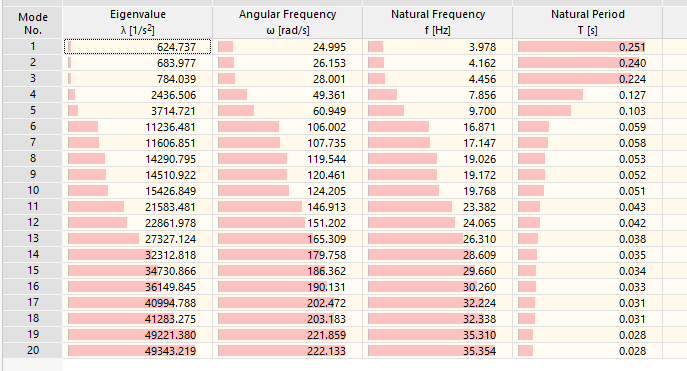
For a structure as complex as yours, it's quite normal to require more than 20 modes to reach the 90% modal mass threshold.
One common consideration here is how to treat the mass of elements in the foundation. These elements do not vibrate, so they don’t contribute to the effective modal mass. However, their mass will still be included in the total mass of the system, which is compared against the modal mass to calculate the effective modal mass. The effective modal mass is approximately the ratio of the modal mass to the total mass of the system.
For more information, the following Knowledge Base article may offer further insights on this concept.
Load Calculation in Response Spectrum Analysis and Simplified Seismic Analyses
6. Do you have recommended settings or workflow for modal analysis of stadium roofs / cable-supported timber structures?
Each structure, whether it's a building, stadium, or another type of construction, has unique characteristics. There are no one-size-fits-all solutions, and the conditions can vary significantly.
My advice:
-
Run several iterations with varying parameters, especially when you're uncertain about their impact on the modal analysis.
-
This iterative process will help you get a "sense of the problem" and allow you to identify which variables have the most significant effect on the results.
Through trial and error, you’ll find the best approach for your particular structure.
I hope this helps clarify your questions! If you need further assistance or have additional inquiries, feel free to reach out. 
Best regards,
Victor Hidalgo
 Click on File → Save as and choose the following settings to reduce the file size: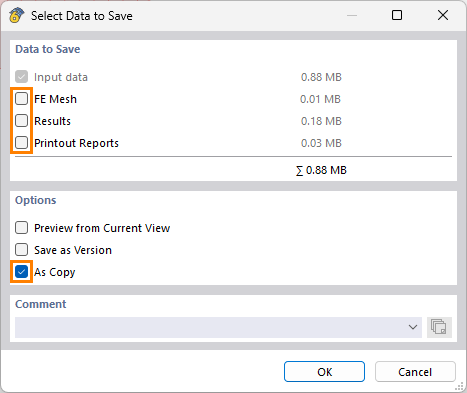
 Prefer not to share the file publicly? No problem – send it to me via direct message: click on my profile picture or user name → Message.