Good Evening:
I am modeling a symmetrical structure, like the one shown in the following figure, but with seismic isolators:
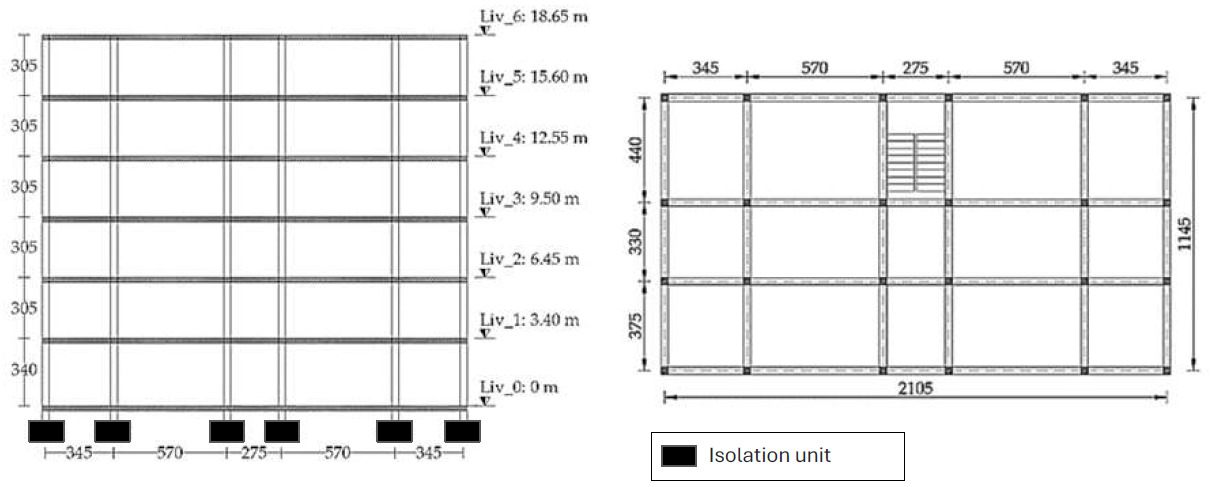
Then I proposed 3 comparisons to be able to increase the main periods in the XX and YY directions:
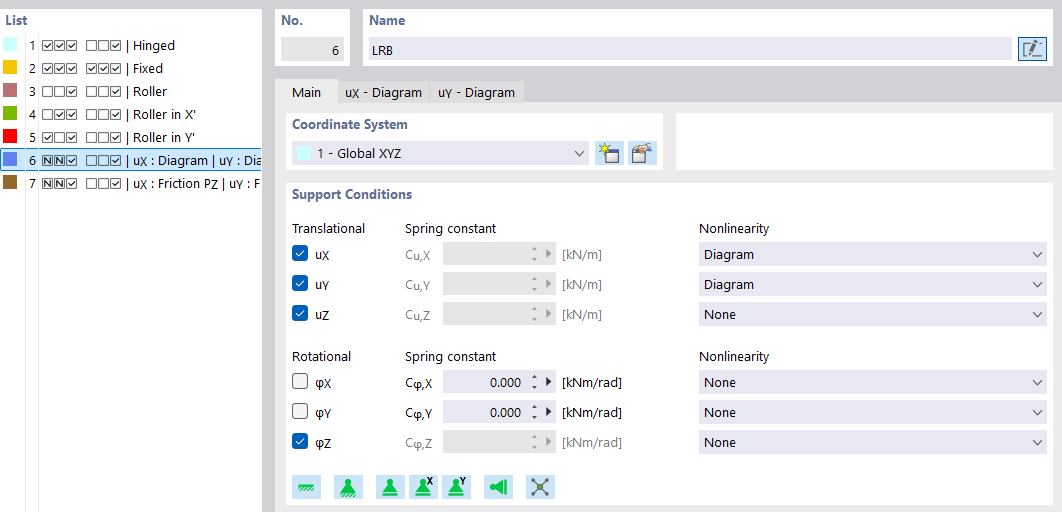
- First Option: All supports are of the LRB type, so I placed the following configuration in the model for the nonlinear support type:
The results of the modal analysis are the following:
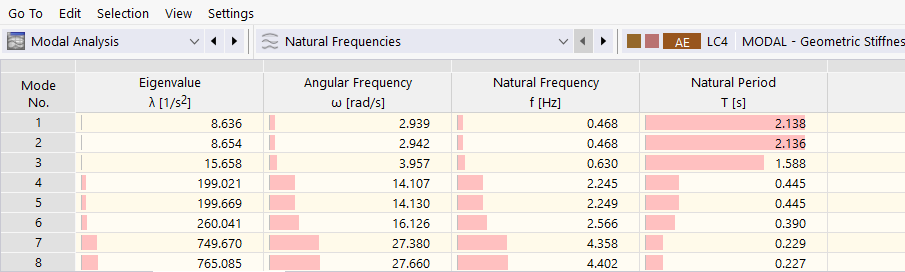
It is observed that the periods are 2.138 sec.
- Second Option: The objective is to increase the period; so (to check the FS - Flat Slider supports), I considered the supports as Roller type for the interior columns, as shown in the following image:
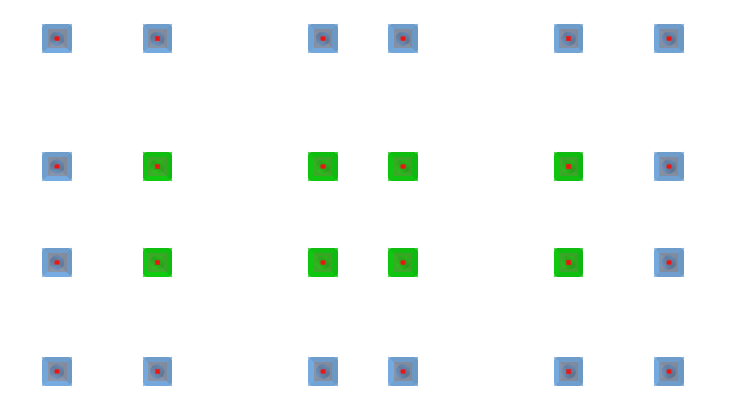
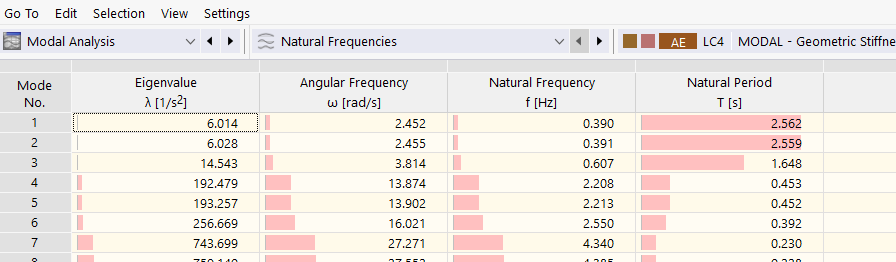
Then, the following periods are obtained, which are higher (makes sense because we have reduced the constraints). The periods have a magnitude of 2.562 sec, as indicated in the following image:
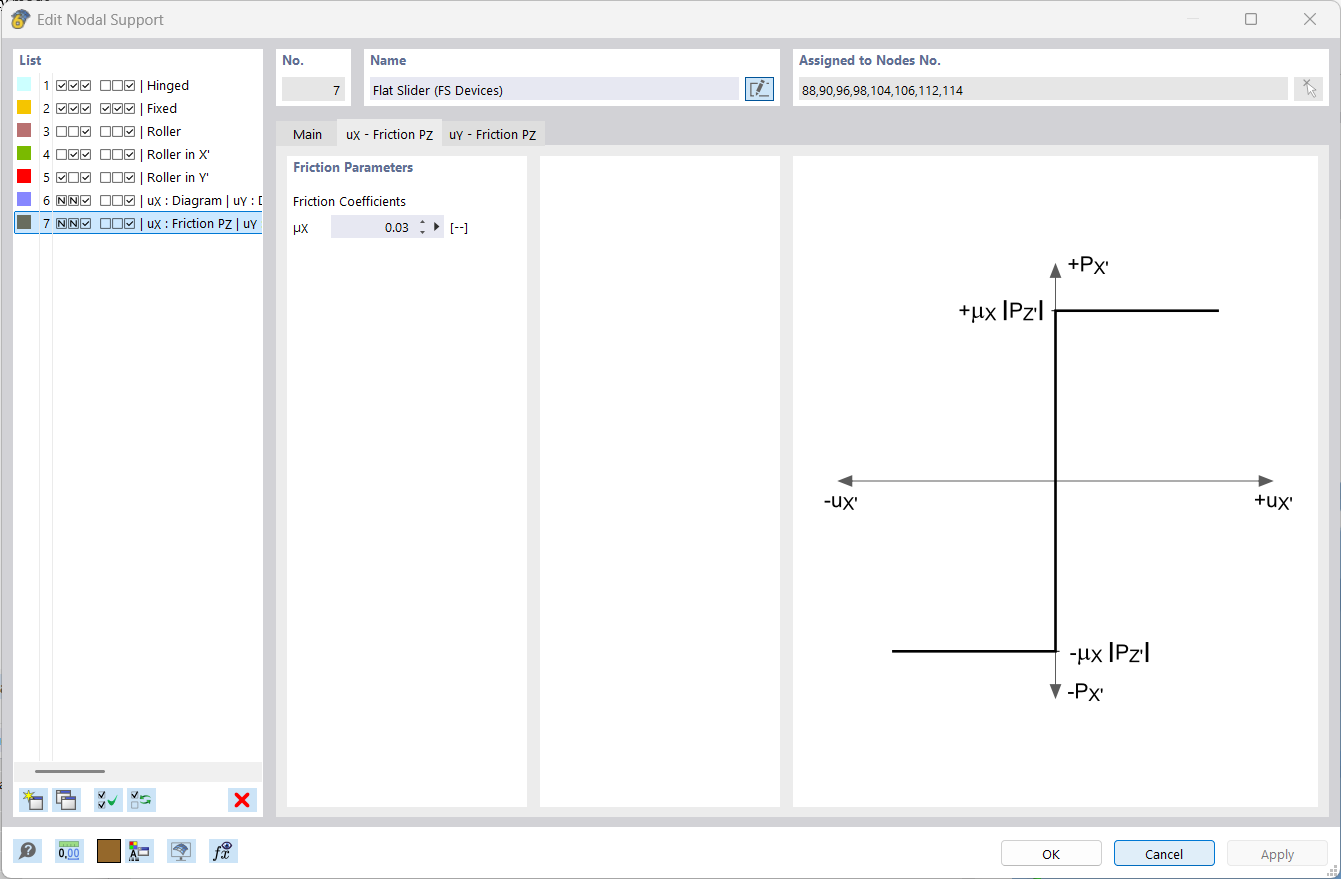
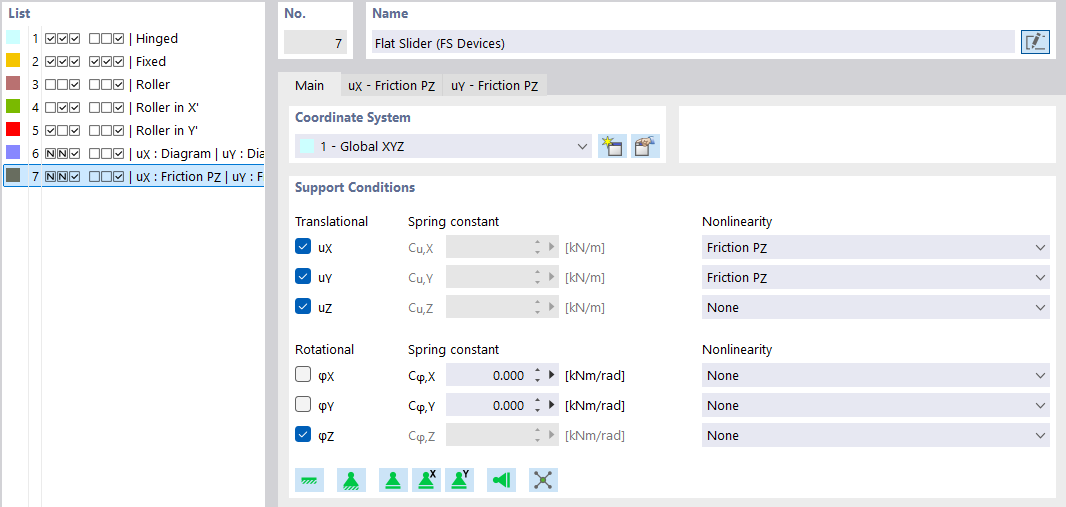
- Third Option, place the FS devices - Flat Sliders, in the same position where the "Roller" type supports were previously placed. A new support type was indicated, with the following characteristics:
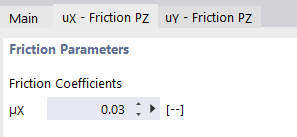
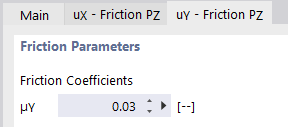
With a friction coefficient value of 0.03 in both directions:
However, for the periods of the modal analysis the following is obtained:
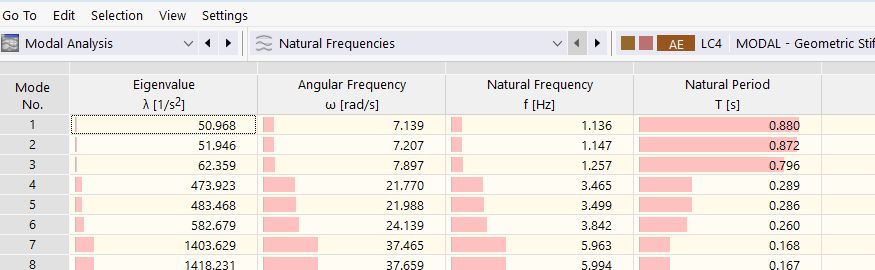
As observed, the periods decreased to 0.880 sec and 0.872 for each direction. However, it does not make sense because the values should be between 2.138 sec and 2.562 sec.
My question is: why does the stiffness of the supports increase for the case of non-linearity with Friction? It is as if the building had fixed "Fixed" supports at those points. I would like to be informed about what would be the correct way to model Flat Sliders type isolators in a model so that the periods make sense?
I attach the model I made in RFEM6 so you can evaluate it, if possible. Perhaps I entered the model parameters incorrectly.
Project2.rf6 (2.4 MB)
I hope you can help me with the questions and doubts I have about the use of the Software.
Best Regards

 What you are observing is indeed a particular behavior, and I’ll try to guide you through the reason behind it.
 in the bibliography the expected initial stiffness of such devices and model the support using these stiffness values. Given the assumptions and limitations of Modal Analysis, it is not possible to consider more than the initial stiffness in this type of analysis.