As part of my master's thesis, I am modeling a slab-girder bridge with prestressed concrete beams in RFEM 6.
I connected the slab girders to the roadway slab (modeled as a surface) via the member type (rib). Within the ribs, I then inserted the prestressing tendons as described in the manual.
However, when I look at the internal forces for the prestressing, I wonder what the difference is between (Normal, Primary, and Difference) in the output of the member section forces?
I suspect that the Difference is supposed to represent the statically indeterminate part of the prestressing tendon. However, this unfortunately does not match in my model. In my opinion, my slab absorbs normal forces from the prestressing tendon, but it actually shouldn't, right?
Regarding the output of the internal force components from prestressing, your assumption is correct. The primary portion output by RFEM describes the statically determinate part of the prestressing. The difference portion represents the statically indeterminate part of the prestressing. The output "normal" internal forces result from the superposition of the primary and difference portions.
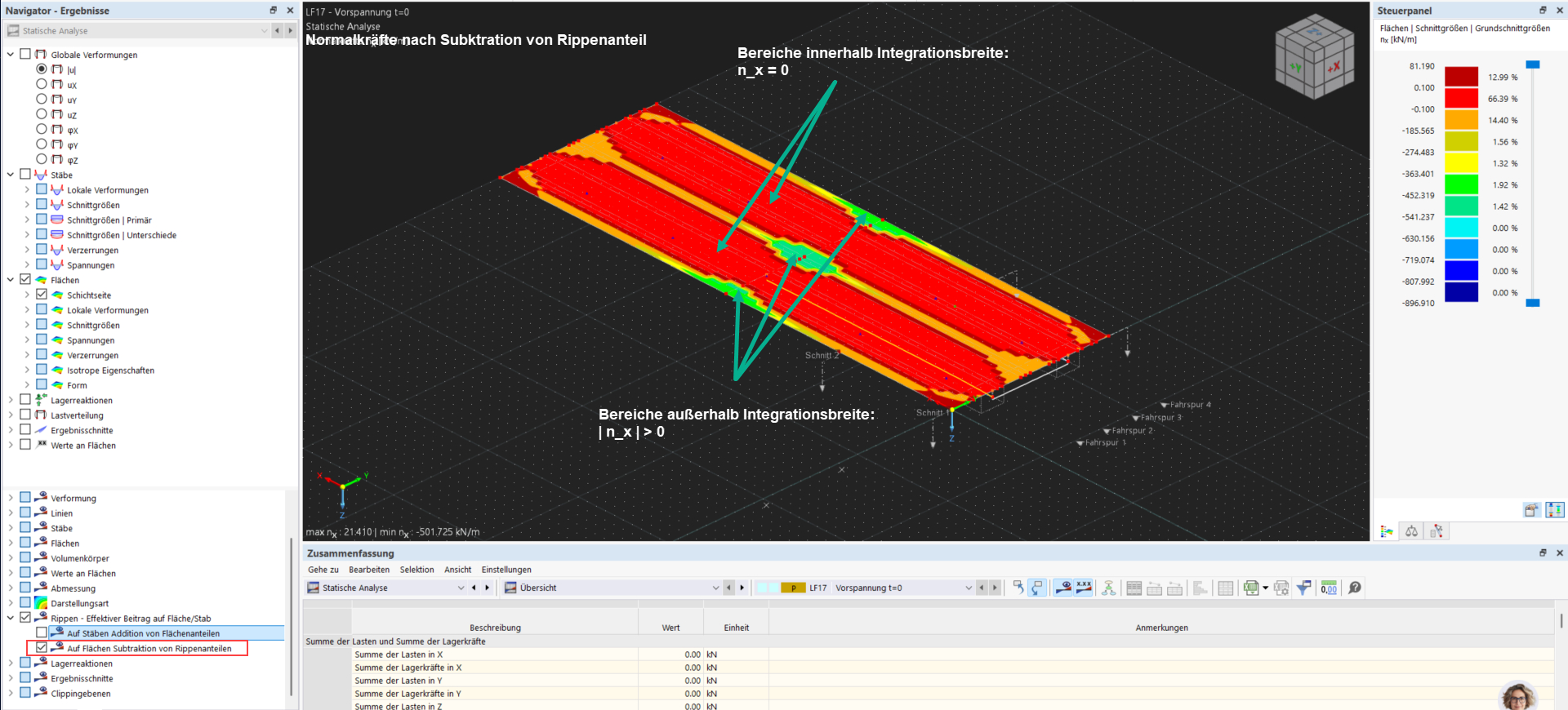
Concerning your observation that normal forces from the prestressing occur in the plate, it should be noted that this behavior depends on the chosen integration width of the rib. If the integration width is smaller than the actual plate width, there are surface elements outside the cross-section integrated into the rib member. These surface elements are not fully part of the plate girder cross-section and can therefore absorb normal forces from the prestressing.
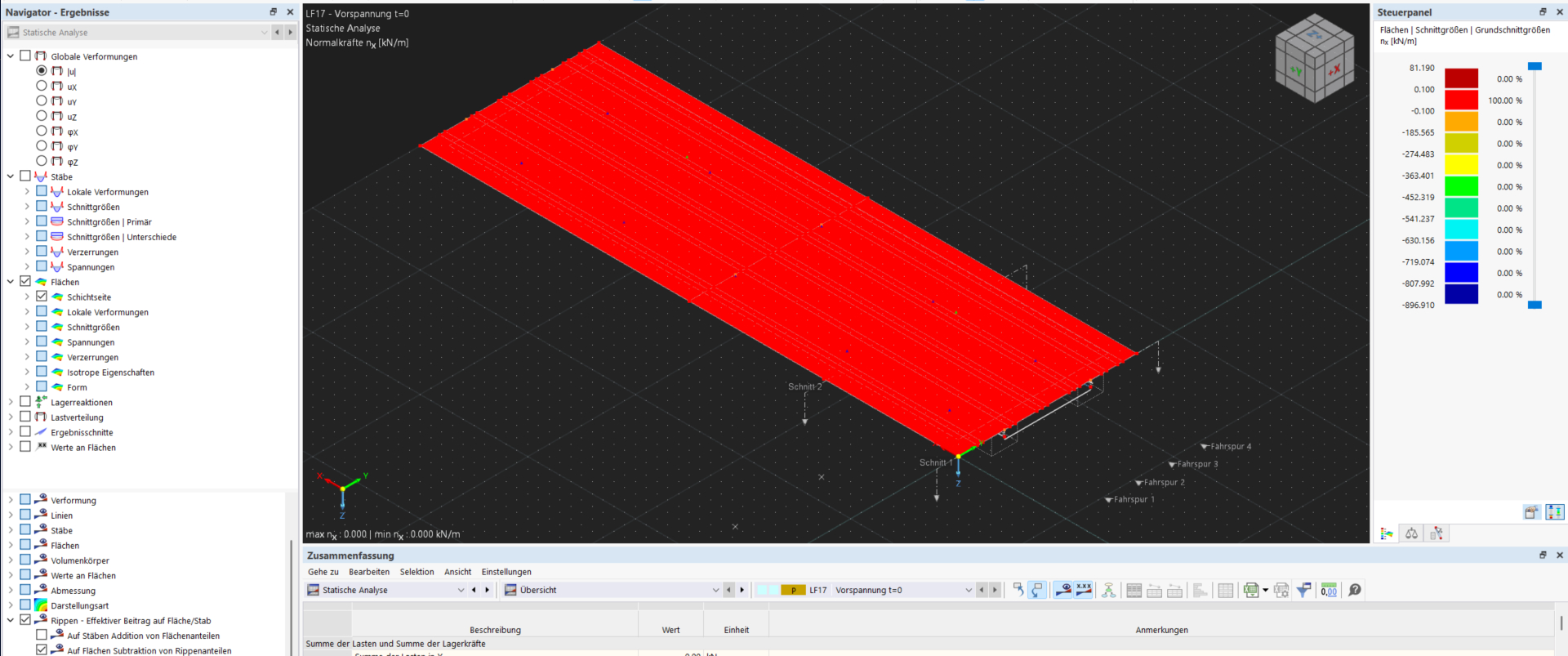
If, on the other hand, an integration width corresponding to the plate width is chosen, all surface internal forces are fully integrated into the rib member. In this case, the prestressing acts exclusively through the rib member, and no additional normal forces occur in the surface as a result of the prestressing (see image below).
I have forwarded the model internally to our development team, as uncertainties were noted during the evaluation of the internal forces. According to the current analysis, the following picture emerges: The deformation behavior of the model is correct and consistent; however, there are currently limitations in the division of the internal forces from prestressing into primary and difference portions in connection with ribs. Specifically, the internal forces resulting from the surface elements are currently not separated into primary and secondary portions but are fully assigned to the total or primary portion. As a result, it can happen that the displayed difference internal forces do not correspond to the expected statically indeterminate portion.

 Click on File → Save As and choose the following settings to reduce the file size: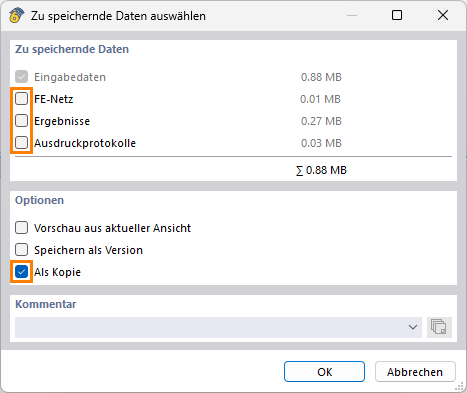
 Don't want to share the file publicly? No problem – send it to me via direct message: click on my profile picture or my username → Message.