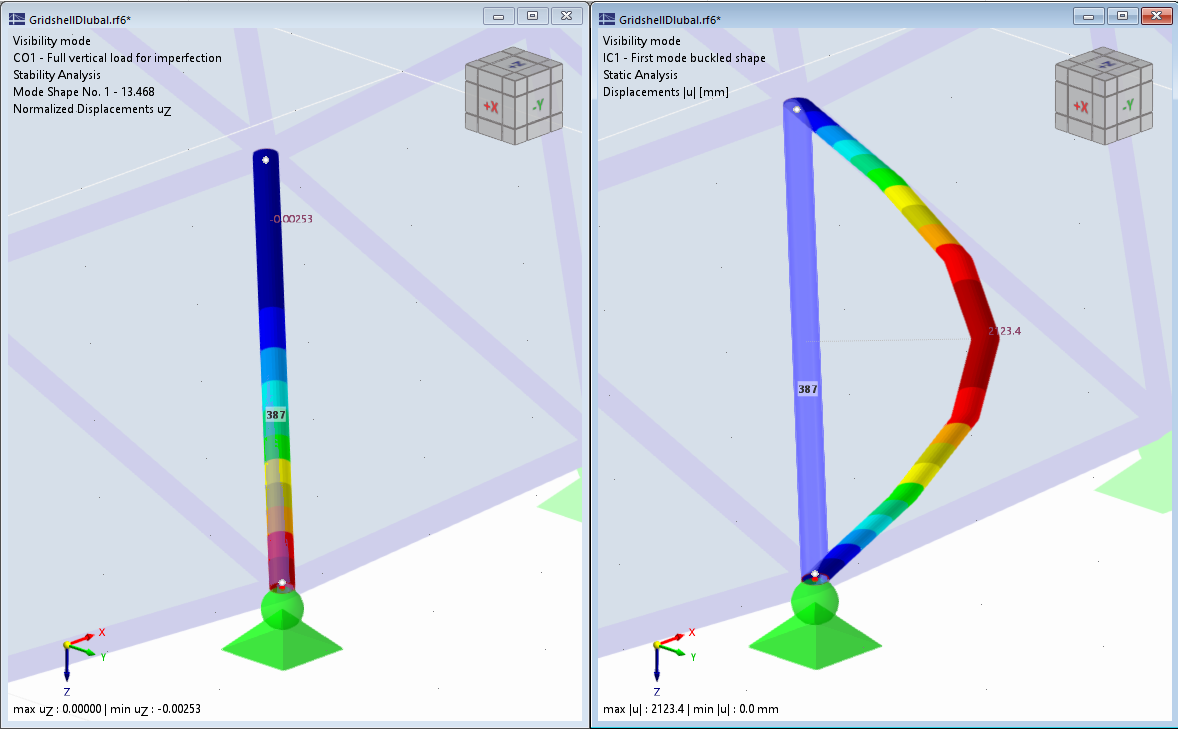
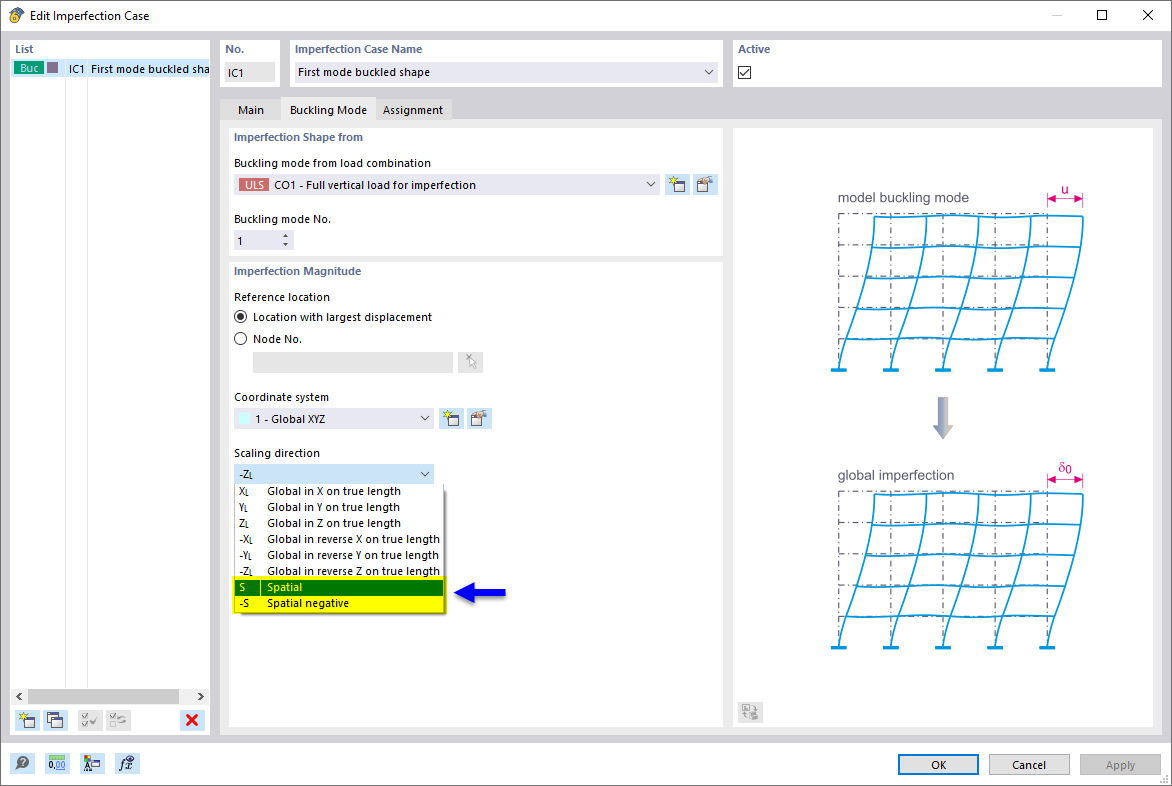
Hi! I am designing a steel gridshell and want to carry out a global buckling analysis using Dlubal RFEM6. First I am carrying out a stability analysis of load combination 1 using a linear analysis. Then I use the obtained first global buckling mode shape from load combination 1 to create an imperfection case. I then use this imperfection case to carry out a non-linear stability analysis of load combination 2.
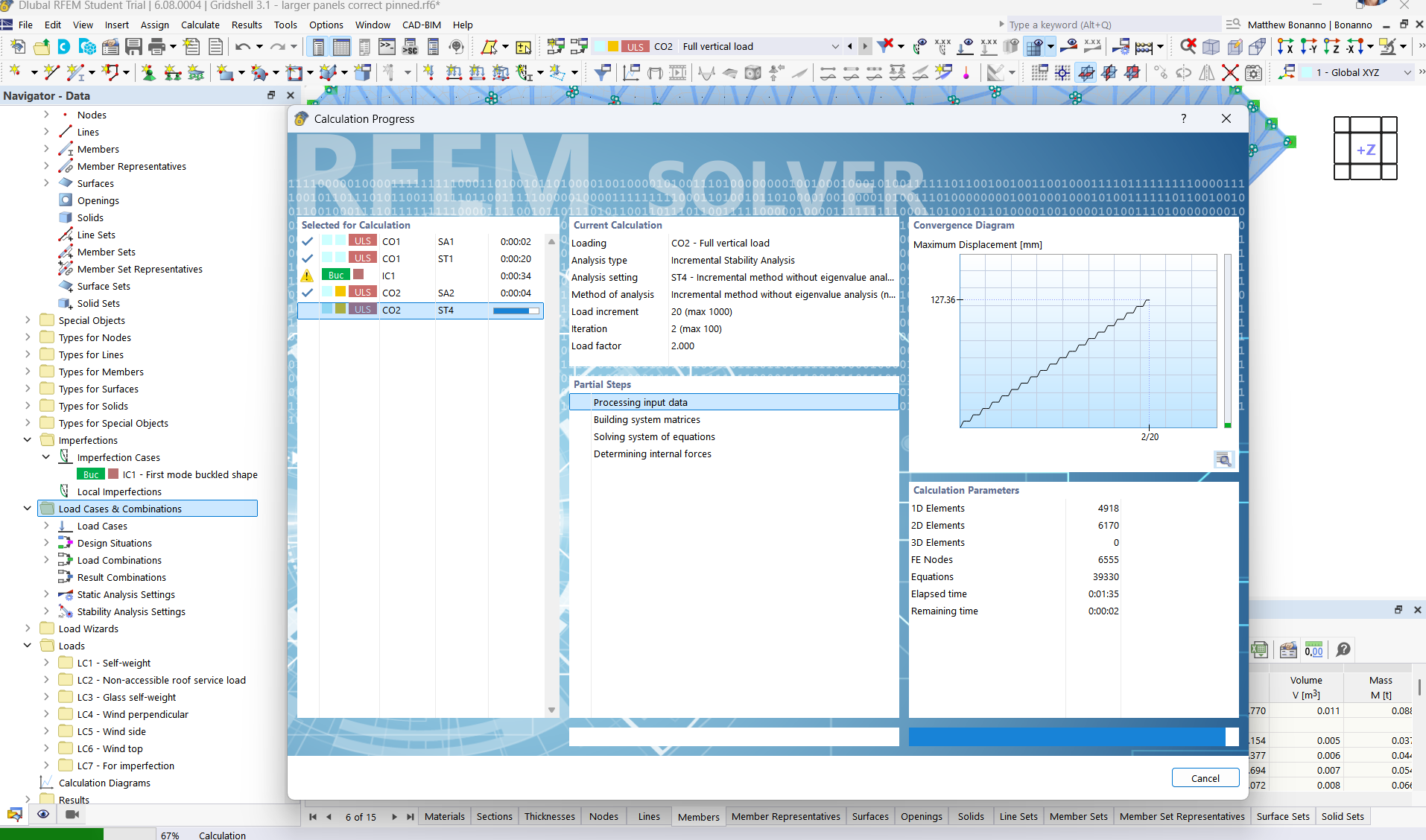
Unfortunately, I am getting a warning when Dlubal is working out the imperfection case. The warning reads as "The required accuracy of the iteration calculation was not reached | The results may be unusable | Increase the 'Maximum Number of Iterations.' Otherwise, the structure cannot support the applied loads or the iteration does not converge."
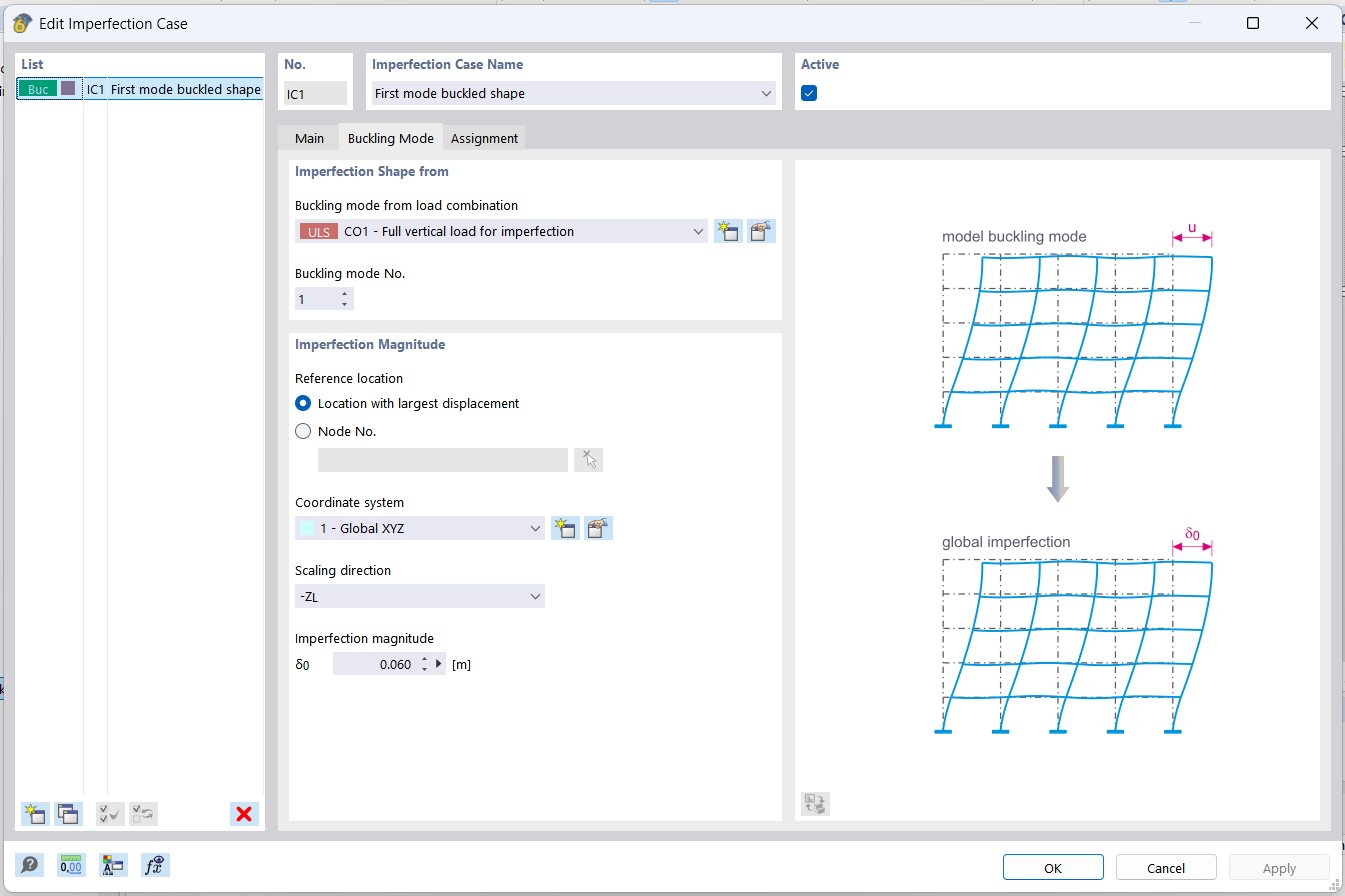
Attached below please find a screenshot of the calculation screen showing the instance that the warning occurs, and also a screenshot of the settings I am using for the imperfection case.
You help is greatly appreciated. Thanks in advance.
 Click on File → Save as and choose the following settings to reduce the file size: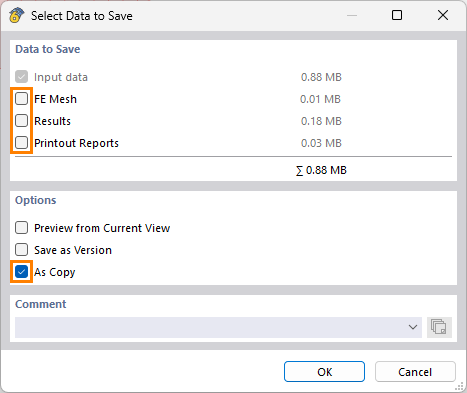
 Prefer not to share the file publicly? No problem – send it to me via direct message: click on my profile picture or user name → Message.